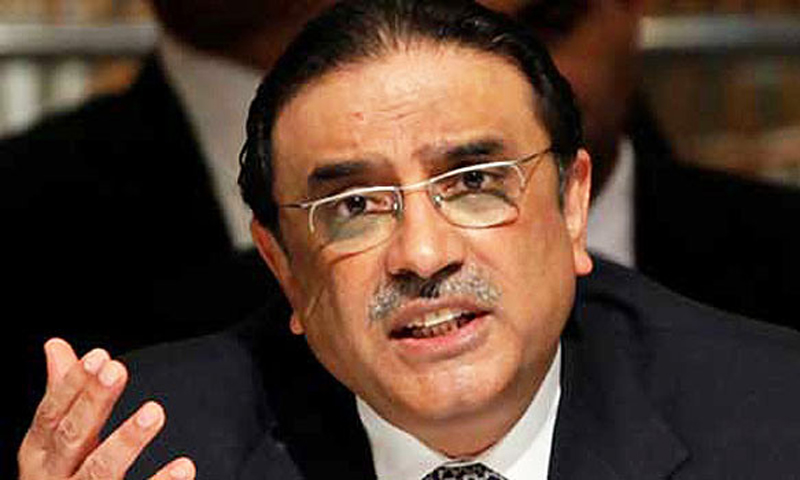
ISLAMABAD: Pakistan's new National Assembly will be sworn in Saturday, completing the country's first ever democratic transition of power, but for President Asif Ali Zardari the political future looks bleak.
Pakistan's 65-year history has been punctuated by three periods of military rule and Zardari was credited with steering the country to its democratic milestone by holding together the fractious coalition government led by his Pakistan People's Party (PPP) for its full five-year term.
But the PPP was routed at the polls, blamed by voters for five years of apathy and drift which saw crippling power shortages worsen and militancy continue almost unabated. Former Prime Minister Nawaz Sharif's Pakistan Muslim League-N (PML-N) romped to victory and will command 177 of the 342 seats in the new assembly, giving it significant leverage to oust Zardari from the president's house when his term expires in September.
The president is chosen by an electoral college comprising the national assembly, senate and four provincial assemblies.
In the run-up to the May 11 election there had been suggestions the PML-N would allow Zardari, the widower of PPP icon Benazir Bhutto, to stay on in return for his party's cooperation in the lower house.
But analyst Imtiaz Gul said that while the PML-N was unlikely to seek an immediate confrontation with Zardari, his days in the top job were numbered. Veteran PML-N leader Sartaj Aziz has been tipped as a possible replacement.
“Based on past experiences, PML-N is likely to let Zardari complete his term rather than gunning for him or forcing him out of his office prematurely,”Gul told AFP. But he added: “Zardari's future as president has become bleak following routing of his party in the election”.
Sharif will be sworn in as prime minister for an unprecedented third term on Wednesday. During his two previous administrations he earned a reputation for hotheadedness and pugnacity. But the problems facing his new government are enormous – a failing economy, endless power cuts and rampant militancy –d and analysts say the 63-year-old is likely to seek a more conciliatory path.
“With ample challenges and limited resources at their disposal, the government will have to play cool with the opposition by avoiding any confrontation and focusing more on the economy,” said political commentator Hasan Askari.
Another key question is how Sharif will handle the Pakistani Taliban. He had mooted the idea of talks with the militants but on Thursday they withdrew their offer of dialogue after their number two was killed in a US drone strike.