0
0
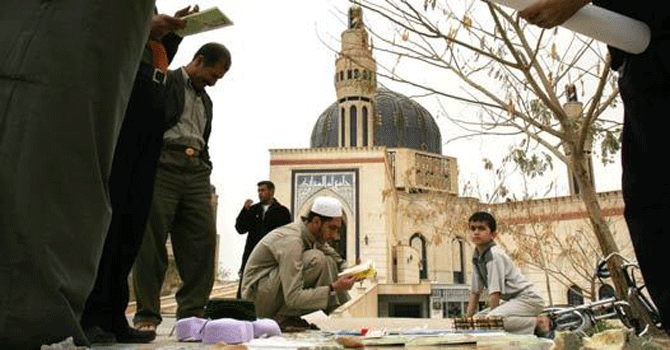

BAQUBA, Iraq: Two bombs near a Sunni mosque and another against a Sunni funeral procession killed 49 people in Iraq on Friday, officials said, after two days of attacks against Shias that killed dozens.
The burst of violence raises the spectre of tit-for-tat killings common during the height of sectarian bloodletting in Iraq that killed tens of thousands of people, and comes at a time of simmering tension between Iraq's Sunni minority and Shia majority.
One bomb exploded as worshippers were departing the Saria mosque in the city of Baquba, north of Baghdad, while a second detonated after people gathered at the scene of the first blast, killing a total of 41 people and wounding 57, police and a doctor said.
And in Madain, south of Baghdad, a roadside bomb exploded near a funeral procession for a Sunni man, killing eight people and wounding at least 25, security and medical officials said.
The bombings are the latest in a series of attacks that have targeted both Sunni and Shia places of worship in the past few weeks and come after two days of assaults against Shia targets.
On Thursday, a suicide bomber killed 12 people at the entrance of Al-Zahraa Husseiniyah, a Shia place of worship in the city of Kirkuk, where relatives of victims from violence the day before were receiving condolences.
Car bombs hit three Shia-majority areas of Baghdad on Thursday, killing 10 people, while 21 people died in a series of bombings that mainly hit Shia areas of the capital the day before.
Gunmen also shot dead the brother of a Sunni MP in Baghdad on Thursday.
Prime Minister Nuri al-Maliki on Thursday blamed the violence on religious intolerance.
“The bloodshed... is a result of sectarian hatred,” Maliki said. “These crimes are a natural result of the sectarian mindset.”
Tensions are festering between the government of Maliki, a Shia, and members of the Sunni minority who accuse authorities of targeting their community, including through wrongful detentions and accusations of involvement in terrorism.
Protests broke out in Sunni areas of Iraq almost five months ago.
While the government has made some concessions, such as freeing prisoners and raising the salaries of Sunni anti-Al-Qaeda fighters, underlying issues have not been addressed.
On April 23, security forces moved on protesters near the town of Hawijah in Kirkuk province, sparking clashes that killed 53 people.
Dozens more died in subsequent unrest that included revenge attacks on security forces, raising fears of a return to the all-out sectarian conflict that ravaged Iraq in 2007-08.
Violence has fallen from those peaks but attacks are still common, killing more than 200 people in each of the first four months of this year, including more than 460 in April, according to AFP figures.