0
0

Exports of leather and leather products went up during July-September this year when the worst-ever floods raged across the country. Exporters say they normally keep three to four months of inventories of raw materials which have exhausted now. They fear that squeezed supply and increase in prices of hides and skins after perishing of over a million of animals in floods, will affect exports adversely.
Pakistan exported 6.827 square meters of tanned leather in first quarter of this fiscal year—up 44 per cent over the year-ago period. Higher volume of exports plus increase in unit prices also improved export earnings by 51 per cent to about $98 million.Export of leather products (minus footballs and footwear which are treated separately) fetched $146 million showing a year-on-year increase of 11 per cent. Volumes of leather garments and leather gloves —two key categories—recorded 10 and 15 per cent growth respectively.
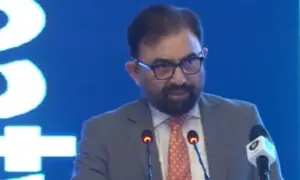
“A rebound in demand in American and European markets boosted exports of leather and leather products,” according to Fawwad Ijaz, Chairman of Pakistan Leather Garments Manufacturers & Exporters Association. He says that bulk of Pakistani leather made-ups have also found new markets in China and Turkey.
“China and Turkey are no more our competitors. They have become buyers of our leather products to cater to a segment of their domestic market demand. These countries have now taken up manufacturing and exports of high value-added products. And their less-privileged find our products rightly-priced and acceptable.”
Fawwad Ijaz and other exporters say exports of tanned leather remained high in July-September despite the floods because exporters had enough inventories of hides and skins. Besides, after the Great Recession of 2008-09 traditional manufacturers of leather products i.e. Italy and France have cut down their production facilities. So, America and most of European countries made larger imports of leather and leather products from China, India and Pakistan.
Whereas they bought more of Chinese and Indian leather made-ups, they are also imported our high-quality tanned leather and some selected brands of leather garments.
Higher prices of hides and skins after the floods have, however, started undercutting Pakistan's competitive advantage. And exporters fear that the situation would not improve even after Eid-ul-Azha. “Everybody noticed a big rise in prices of sacrificial animals on this Eid because of perishing of up to 1.2 million cattle heads. And consequently we are also noticing a substantial increase in prices of hides and skins,” said a Karachi-based leather exporter. Eid
“By mid-November almost all leather manufacturers exhausted stocks of previously collected hides and skins. And they will now depend on costlier raw material obtained during and immediately after . Their biggest worry now is how to remain competitive in the world market,” he explained.
“Some manufacturers are, however, producing a wider range of quality leather products now than in the past. So I don't see a major fall in export earnings of leather products. But export volumes of tanned leather may see a decline from December-January onwards.”
In addition to the loss of cattle heads during the floods, exporters say ongoing war-on-terror in Khyber Pakhtunkhwa, unabated smuggling of animals to Afghanistan and higher domestic inflation—all have undercut supply of hides and skins and made them dearer. But they hope that hiring of qualified fashion designers by some leather garments manufacturers, improvement brought about in tanning technologies, pick-up in global demand and entry of Pakistani exporters into new markets may consolidate recent gains in leather sector's exports.
“The consolidation process can be accelerated if the government starts implementing the promises it made in the last trade policy,” says executive director of a leading Karachi-based leather garments manufacturing unit.
The government had promised Rs38 million for facilitating research and development activities at leather manufacturing and exporting factories and Rs91 million for skill development of their employees. It has also ensured leather manufacturers and exporters to co-finance setting up of design institutes in every factory. “Nothing has happened so far,” said a senior official of PLGMEA, adding that exporters had not even received money out of the Rs58 million Export Development Fund.
He said some leather exporting units have hired fashion designers of Lahore Institute of Fashion designing and some others are running R&D programmes on their own. PLGMEA members are also running two support services centres, one in Karachi and the other in Sialkot. Quite a number of exporters outsource value-addition jobs of leather made-ups to skilled workforce of these centres. Eid
Leather industry officials say two things need to be done side by side to ensure a sustained growth in exports of both tanned leather and leather products. “First, we need better logistics and preservation systems for hides and skins,” says director of a leading local tannery. “The bulk supply of hides and skins comes in during when tens of thousands of animals are sacrificed across the country.
But poor and least-coordinated system of collection, bad logistics and unhealthy preservation techniques result in loss of 30-40 per cent of the supply. This needs to be fixed through investment in supply chain management for qualitative processing of leather. If we do that we can increase unit value of both exports of tanned leather as well as leather products.”
In addition to this, diversification of leather products is a must. Currently, the industry is too focused on manufacturing leather garments and gloves, though there is a huge potential for exports of leather shoes, travel bags, handbags and purses, undergarments, leather chairs, wallets, key chains, sofa bag covers, upholstery and casings and covers for a wide range of industrial products.
Exporters say the inclusion of leather raw materials in the list of the items eligible for trade concession package recently approved by the EU member countries may hurt them. “This may further aggravate shortage of tanned leather,” said an exporter. “If exclusion of tanned leather from the list is not possible now the government should at least press for inclusion of value-added products as well,” he suggested.
In the last fiscal year, exports of leather made-ups had fallen to $453 million from $557 million a year ago also because of larger imports of raw materials. (Exports of tanned leather had gone up to $337 million from $299 million). Exporters say if value-added leather products are not included in the list of eligible items for trade concessions, their exports may suffer.