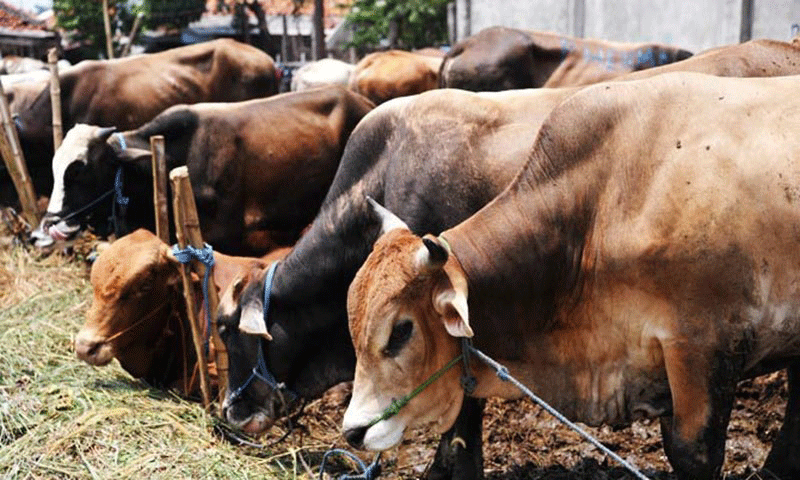
ISLAMABAD: The country is facing an unprecedented meat crisis these days apparently because of the ban on the culling of cows, female goats and buffaloes recently imposed by the Punjab government.
The ban has caused a sharp increase in the prices of red meat and an acute shortage of cattle in the market.
It is believed that the crisis will deepen in the run-up to Eidul Azha.
Also read: Punjab ‘reinvigorates’ ban on female animal slaughter
“The retail price of mutton has increased by Rs100 per kg in Punjab and Islamabad and it is expected that the price will rise by Rs200 per kg,” Ehtesham Shehzad, an office-bearer of the Jamiatul Quresh Meat Sellers Association, told Dawn.
He said since Punjab met more than 80 per cent of the meat requirement of the country, the ban had created a meat crisis not only in the province but also in other parts of the country.
Mr Shehzad said as Islamabad had no slaughter house, meat sold there came from animals slaughtered in Rawalpindi. Therefore the crisis has also hit the federal capital.
The Punjab government recently issued a notification, which has been sent to all slaughter houses in the province, under which slaughter of female animals has been prohibited to increase animal production. After receiving the notification, the management of slaughter houses has stopped slaughter of female animals.
Mr Shehzad said that his association had repeatedly suggested ways and means to the federal and provincial governments to increase cattle production, but they never responded.
If the governments were serious in increasing cattle production, they must stop meat export and open more livestock farms, he said.
The gossip in the meat market, he said, was that the government had imposed the ban because it wanted to export over 50,000 goats, cows and buffaloes to the Middle East.
Salem Khan, a meat seller in G-9 Markaz, Islamabad, said the government had started imposing heavy fines on cattle traders if they brought cows, female goats and buffaloes to the market.
He said because of shortage of animals, their prices had gone up, pushing the mutton price to Rs750 per kg from Rs650. Similarly, the price of beef has risen by Rs50 per kg.
“Earlier, we have observed that of 100 animals brought to the market, 60 were female and 40 male. Even then the number of animals brought to the market did not match the demand. Now a 60 per cent decline in the number of animals reaching markets has created a crisis,” he said.
Some meat sellers said they believed that the provincial government had made the move to favour the poultry industry.
Dr Furrukh, general manager of Sihala Slaughterhouse in Rawalpindi, said the decision had been made in the light of a livestock survey conducted by the ministry of livestock. It has revealed that cattle production has registered a 40 per cent decline in the province as compared to the last such survey conducted 15 years ago.
He said culling of those female animals which could produce calves had been banned but there was no ban on the slaughter of those female animals who had completed their reproductive life or those who could no more produce milk.
However, he said, the government also wanted to boost the poultry industry.
He expressed the hope that the crisis would be over in two years as the production of calves by protected female animals would increase the number of cattle heads.
Published in Dawn, August 15th, 2015
On a mobile phone? Get the Dawn Mobile App: Apple Store | Google Play