VATICAN CITY: Fearing genocide of Christians, the Vatican has given its approval to US military air strikes in Iraq — a rare exception to its policy of peaceful conflict resolution.
The Holy See’s ambassador to the United Nations, Silvano Tomasi, this weekend supported US air strikes aimed at halting the advance of the Islamic State (IS) militants, calling for “intervention now, before it is too late”.
“Military action might be necessary,” he said.
While the Vatican vocally disapproved of the US-led campaign in Iraq in 2003 and the 2013 plan for air strikes on Syria — fearing both might make the situations worse for Christians on the ground — fears of ethnic cleansing by Islamists has forced a policy change.
Tomasi’s appeal follows warnings from Church leaders in Iraq that the persecution is becoming genocide, with urgent help needed to protect Christians and Yezidis in the north of the country, where tens of thousands have been forced to flee for their lives.
Military support was needed “to stop the wolf getting to the flock to kill, eat, destroy”, Rabban al-Qas, the Chaldean bishop of Amadiyah, told Vatican radio.
Tomasi insisted “those supplying arms and funds to the fundamentalists, (and) the countries tacitly supporting them, must be revealed”, while Qas pointed the finger at Saudi Arabia.
Others, like the Iraq-based leader of the Chaldean Catholic Church, Louis Sako, called for wider intervention, saying the US strikes offer little hope the jihadists would be defeated.
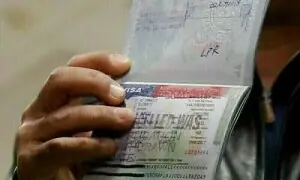
“The position of the American President Obama only to give military assistance to protect Arbil is disappointing,” said Sako, who has been trying to persuade his flock to resist attempts to drive them out of Iraq, and turn down offers of humanitarian visas to Europe.
‘What could be worse?’
The Vatican had been criticised for being slow to react, with Pope Francis limiting himself to calls for a peaceful resolution, expressing on Sunday his “dismay and disbelief” over the violence and calling for an “effective political solution”.
The Vatican’s Pontifical Council for Interreligious Dialogue on Tuesday called for Muslim leaders to denounce the brutality of IS militants, saying there was no possible justification for their “unspeakable crimes”.
The council said IS militants were guilty of the “heinous practice of decapitation, crucifixion and stringing up bodies in public places”, insisting that “no reason, certainly no religion, could justify such barbarism”.
Experts said Tomasi’s support for air strikes did not mean a change in Vatican policy on war spearheaded by a bellicose Francis.
“There has been no change in thinking. The Vatican’s take is that the reality now is apocalyptic and there is no alternative,” said Vatican expert John Allen, who writes for The Boston Globe.
“They believed overthrowing Saddam Hussein in 2003 or Bashar al-Assad in 2013 would make things worse for Christians. In 2014, what could be worse for them than the Islamic State’s victory?” he said.
The Catholic Church’s catechism defines the concept of a “just war”, which includes the prevention of genocide among other war crimes.
For Sandro Magister, who writes for La Stampa’s Vatican Insider, the crisis should have elicited a stronger stance from the pope on Iraq. “His timid response has been very surprising. He talks about the persecution of Christians in Iraq as if it was some sort of natural disaster, without singling out those responsible,” he said.—AFP
Published in Dawn, August 14th, 2014