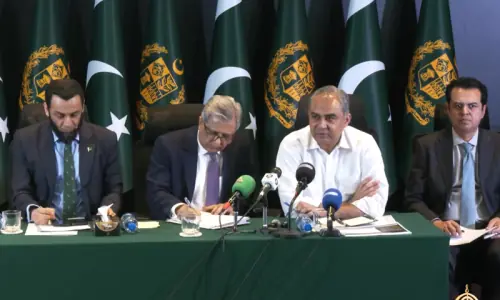
A MONTH and a half since the Geo-ISI controversy erupted, Pemra has finally delivered its verdict: Geo News has been suspended for 15 days and a multi-million rupee fine has been imposed. Leave aside whether the decision was right or wrong for a minute and focus on the procedure adopted. Unlike the earlier attempt by some Pemra members to hijack the verdict against Geo while the channel was being muscled off air by the powers-that-be via pressure on local cable providers, Friday’s verdict had an air of propriety to it. There were no theatrics, no grossly inappropriate statements, no attempt to overtly curry favour with certain institutions. Geo’s broadcast on April 19 after the attack on Hamid Mir in Karachi clearly did contravene many of the basics of fair and responsible journalism. Whatever the heightened emotions of that day and the long-standing suspicions about the army-led intelligence apparatus, some transgressions were committed. Whether those actions ought to have been punished with a vitriolic campaign afterwards and now with a suspension of Geo News’s licence is a more debatable issue.
What isn’t debatable though is the need for an overhaul of the electronic media’s regulatory system. Geo has been forced to pay for its mistakes, but day after day, news channels across the board routinely violate the most basic of rules of good and responsible journalism. Regulation is not the same as censorship. Because of its nature, the media has certain responsibilities and duties — both to the public it seeks to inform and the people and institutions it reports on. Sometimes, as happened when incendiary religious accusations were trotted out against Geo, the conduct of sections of the electronic media has been borderline criminal. Surely, better regulation — clearer rules, better enforcement, more transparency and fairness — is needed. The way ahead is also clear: the government can move parliament to consider a thorough re-examination of the existing Pemra-based regulatory framework and then, after meaningful consultation with the main stakeholders, a new regulator with new rules and new powers can be created. It can be done; indeed, it should be done.
Published in Dawn, June 8th, 2014