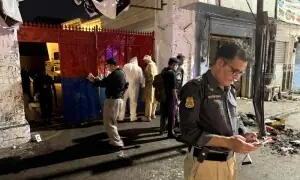
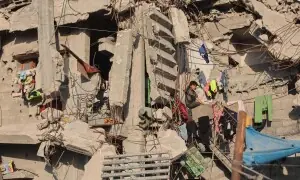
PEOPLE in most parts of Punjab were forced to do without gas for almost 48 hours after three main transmission pipelines supplying the fuel to the province were blown up near Rahim Yar Khan on Sunday night. While supply to domestic consumers was reinstated, to some areas partially and fully to others, by Tuesday afternoon, the Sui Northern Gas Pipelines Ltd had told its commercial and industrial users to wait at least one more day before the ruptured lines were repaired to restore their limited supply. The duration and frequency of power cuts in many parts of Punjab — and in other parts of the country — have also increased because of interruption in gas supply to power producers. Consequently, factories are facing significant output losses or have switched to expensive alternatives to meet their production deadlines as gas vanishes from the system and power shortages rise. There is little the government has been able to do to mitigate the sufferings of domestic consumers or save commercial and industrial users from financial losses.
The incident in which at least one life was lost and scores of villagers were forced to flee their homes has exposed the vulnerability of similar installations across the country. It isn’t the first time that a gas pipeline has been blown up. It has happened many a time in the past in Balochistan — and once in Punjab. Mostly Baloch dissidents have accepted responsibility for carrying out the attacks. But the fact that it is the first incident of its kind to have taken place in Punjab shows that the dissidents have acquired the capability to attack and destroy important installations deep in this province as well. (The Baloch Republican Army is reported to have accepted responsibility for the Rahim Yar Khan blasts.) A senior police official’s statement that the SNGPL had failed to take proper measures to secure the pipeline even after a previous attempt to blow it up at the same place was fortunately averted just a month ago underscores the bureaucratic lassitude the company is immersed in. It can only be hoped that this incident will prove big enough to awaken the company and the other authorities responsible for protecting such installations from their deep slumber.