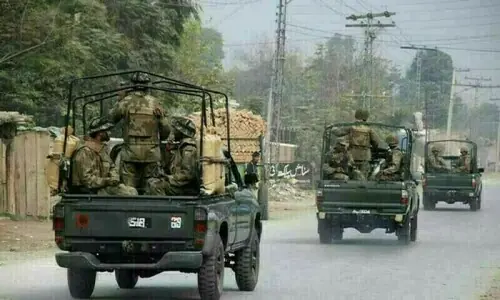
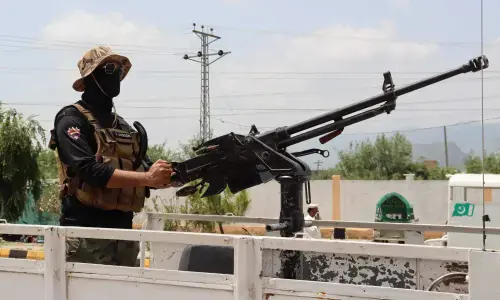
IT was a classic example of how poor coordination and mishandling of a security threat can enhance the danger at hand. For several years now the security and law-enforcement forces have been trying to map out counterterrorism and emergency-response policies and strategies to respond to the terrorist threat inside the country. But the drama that unfolded in Islamabad on Thursday shows that such efforts, even when applied to a lesser threat, have been practically in vain. When representatives of several law-enforcement and security agencies converged on the gun-toting Mohammed Sikander, his wife and two children, one would have expected them to adhere to some sort of standard operating procedure or response plan. Instead, we witnessed the mystifying spectacle of different law-enforcement bodies working at cross-purposes.
The appalling failure to respond with any degree of sense or knowledge of how to proceed in hostage situations was painfully evident. Potentially fruitful efforts to defuse the tension through negotiation were interrupted. And while PPP politician Zamurrad Khan may have brought about the dénouement, he put in danger several lives, including those of the two children. The TV channels, too, must shoulder their share of the blame for contributing to the security risk and for turning a crime scene into a farce. Details were given out by the media, for example about the movement of commandos, that could have jeopardised lives given that both the gunman and his wife were connected to the cellular network. This and many other factors, for instance the absence of any time delay, went against the code of media coverage of terrorist acts and hostage situations that almost all channels had agreed upon four years ago. The Islamabad police chief said that commando efforts were hampered by members of the media and the public, and this is no doubt true. Efforts to have these onlookers move further away produced only outcries — unfairly — of police highhandedness. At the same time, was there any need for policemen to indulge in aerial firing after Mohammed Sikander was brought down?
This incident did not involve militant and extremist outfits that operate with a high degree of organisation but a lone, seemingly disoriented gunman. There is good reason to contemplate the response to a real attack or a true hostage situation with a high degree of trepidation. While the militant network has demonstrably improved its functioning, it is clear that our law-enforcement apparatus has not. If the situation does not change, the costs can be truly appalling.