Japan approves survey for construction of radioactive waste disposal site
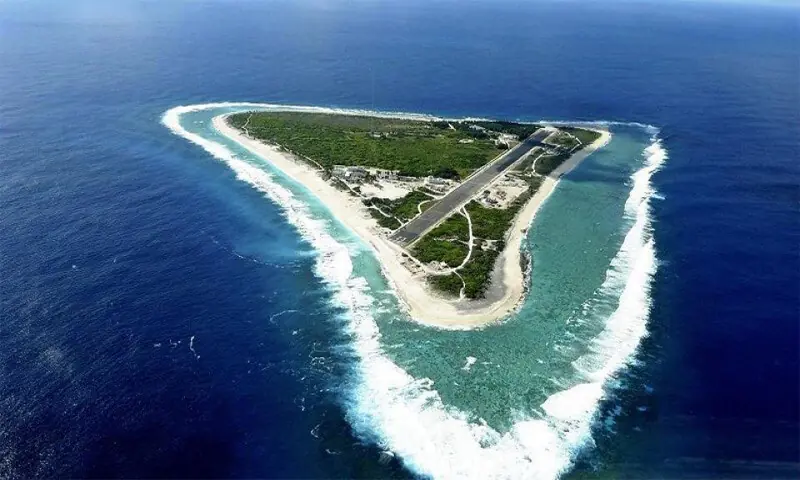
THE mayor of Tokyo’s Ogasawara village has said it will accept the central government’s request to conduct a literature survey on Minami-Torishima Island for the construction of a final disposal site for high-level radioactive waste.
“If the central government is going to carry it out, we will accept the decision,” Mayor Masaaki Shibuya said at a press conference on the day.
The literature survey — the first phase of selecting a final disposal site — will involve analysing geological maps and academic papers over a period of about two years.
If the survey is conducted, it would be the fourth such survey nationwide, following Suttsu and Kamoenai, both in Hokkaido, and Genkai, Saga Prefecture. It will also be the first case in which the central government made the request to the local government, instead of the other way around.
The radioactive waste is a result of spent fuel from nuclear power plants. After the plutonium and uranium is extracted, the spent fuel is mixed with glass and enclosed in stainless steel containers.
As the waste emits extremely high levels of radiation, it needs to be buried more than 300 meters underground in accordance with the Designated Radioactive Waste Final Disposal Law.
Minami-Torishima Island, which is Japan’s easternmost island and administered by Tokyo, is located about 1,950 kilometres southeast of central Tokyo and about 1,200 kilometres from Chichijima Island, where the village office is located. The island, with an area of 1.5 square kilometres, is entirely state owned. Minami-Torishima Island hosts about 30 Self-Defence Forces personnel and others but has no residents.
The final disposal site will be determined following three phases: a literature survey, a preliminary investigation to check geological structures and a detailed investigation to conduct a study at an underground facility. The entire process is expected to take about 20 years.
Published in Dawn, April 20th, 2026