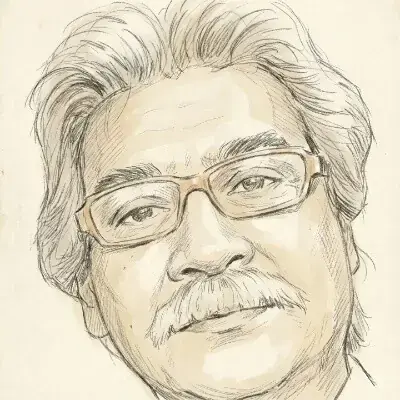
KARACHI: Sindh Chief Minister Syed Murad Ali Shah said on Saturday that the provincial government did not introduce any new taxes in the budget 2025-26. Additionally, some existing taxes have been eliminated or reduced, with export processing zones and special economic zones exempted from the services tax.
Addressing a post-budget press conference at the CM House, he announced the abolition of the entertainment tax and reductions in restaurant taxes.
He said that as per the Sindh Finance Bill 2025-26, the stamp duty on third-party vehicle insurance had also been reduced to Rs50 with a drop in the insurance tax from 15 to 5pc, adding that a list of tax-exempted items would be published as per the IMF requirement.
As per the finance bill, services of parliament and assembly members, local government representatives, judges, and tribunal members were exempted from sales tax.
Chief minister opposes Centre’s 18pc general sales tax on solar panels
Tax exemption on construction of 10,000 sq. feet of houses in private residential schemes and there would be no tax on health and life insurance worth Rs500,000.
The government-approved universities and colleges will also not have to pay tax on educational research, while Haj and Umrah travel operators will be exempt from tax.
According to the bill, a 19.5pc tax would be applied to vehicle trackers, security cameras, and alarm systems in security services.
The internet, telephone services, Wi-Fi and broadband connections service will have to pay 19.5pc tax, and there will be a three per cent tax on those who transact vehicles.
There will be 8pc tax on online payments of restaurants, hotels, farmhouses and beverages. Cab services will have to pay 5pc, rental car services and freight vehicles will have to pay 8pc tax.
As per the bill, 8pc tax will have to be paid on hiring armed guards and security guards.
There will be 8pc tax on real estate services and 3pc on foreign exchange services.
Coaching and training centres will also have to pay 3pc tax. Schools and colleges that receive an annual fee of Rs500,000 will also pay 3pc tax.
The chief minister in a wide-ranging post-budget press conference outlined an ambitious fiscal and development agenda for the province while addressing serious financial challenges and federal shortfalls.
Flays Centre for withholding funds
He criticised the federal government for failing to meet its financial commitments, revealing that Sindh was informed just one day before the budget presentation that Rs105bn in expected funds would be withheld. “Sindh has received Rs1,478.5bn from the divisible pool since last year, but Rs422.3bn remains outstanding,” he lamented.
Mr Shah expressed hope that the withheld amount would be disbursed by the end of June.
He said that the Sindh government would allocate Rs590bn for development projects this year, with a total budget of Rs3.45tr — Rs1tr for development and Rs2.15tr for current expenditures.
“Notably, Rs1.1tr is earmarked for salaries and pensions, leading to salary increases of 12pc for lower-grade employees and 10pc for higher grades.
He said that sectoral budget increases included an 18pc rise in education funding and an 11pc increase in health. Funding for agriculture, irrigation, and local government projects has also seen significant boosts.
Job vacancies
He also noted 20,000 to 25,000 job vacancies in Grades 1 to 4, with plans for recruitment via IBA-administered tests for Grades BPS-5 to 7 and filling higher Grade 16 positions.
On the critical Sukkur-Hyderabad Motorway, the chief minister expressed concern over the halving of federal funding from Rs30bn to Rs15bn.
Opposes tax on solar panels
Mr Shah emphasised that major projects are not included in the Federal Public Sector Development Programme (PSDP) and criticised the 18pc tax on solar panels as unjust, warning that the Pakistan Peoples Party would not support the federal budget if concerns raise are not resolved.
Addressing various challenges, he acknowledged delays in operating 150 buses in Karachi due to resource constraints but highlighted ongoing infrastructure and sanitation projects.
On digitisation, Mr Shah admitted the Sindh government had not fully digitised land records yet, but was piloting a project in Matli and Sukkur.
Mr Shah revealed Rs25bn allocated for solar projects and the launch of afforestation programmes to combat climate change, admitting more needs to be done.
Published in Dawn, June 15th, 2025