0
0

WASHINGTON, April 9: Asian economies are on course for rapid growth this year but they face multiple threats even besides the Iraq war, the International Monetary Fund said on Wednesday.
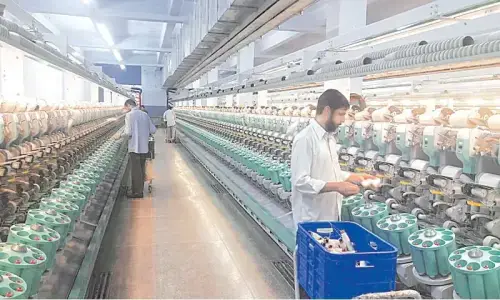
China, the increasingly powerful engine for Asian growth, is heavily dependent on the swings of the world economy and is unlikely to provide much of a cushion from outside shocks, the IMF said.
“Emerging Asia is in fact the strongest growing region of the world at 6.0 per cent for 2003 and 6.3 per cent for 2004, although we do not view this recovery as self-sustaining if the rest of the world slumps,” IMF chief economist Kenneth Rogoff told a news conference.
Chinese gross domestic product growth would ease from 8.0 per cent last year to 7.5 per cent both this year and next.
Growth in newly-industrialized economies — Hong Kong, South Korea, Singapore and Taiwan — would dip from 4.6 per cent last year to 4.1 per cent in 2003 and rise to 4.5 per cent in 2004.
Growth in Southeast Asian nations — Indonesia, Malaysia, the Philippines, and Thailand — would ease from 4.3 per cent last year to 3.9 per cent this year before recovering to 4.3 per cent next year.
In South Asia — Bangladesh, India and Pakistan — growth would rise from 4.7 per cent last year to 5.1 per cent in 2003 and 5.8 per cent next year.
In Vietnam, growth would climb from 5.8 per cent last year to 6.2 per cent this year and 7.0 per cent in 2004.
The Middle East economies, which includes the Gulf oil states as well as the poorer Mashreq area, saw growth slip to 3.9 per cent last year, but should see an improvement to 5.1 per cent this year and 4.8 per cent expansion in 2004, the IMF said in its World Economic Outlook.
The IMF predicted 5.8 per cent growth this year for the oil exporting countries in the region, including Saudi Arabia, Kuwait and Iran, while the Mashreq countries of Egypt, Jordan, Lebanon and Syria would see average growth of just 3.1 per cent.
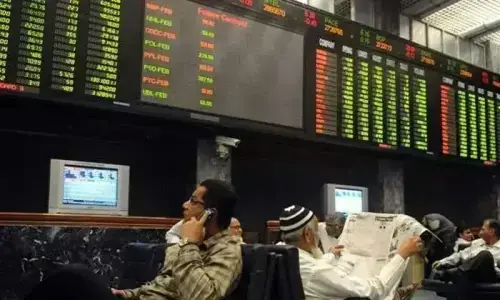
GLOBAL ECONOMY: The global economy will see “tepid” growth of 3.2 per cent, even assuming a swift conclusion to the Iraq war, the International Monetary Fund warned.
The IMF, in its semiannual World Economic Outlook, said the war was just one of several factors holding back the global economy, which the IMF said grew 3.0 per cent in 2002.
The IMF baseline forecast “assumes a tepid global recovery, with normal growth only resuming sometime during the first half of 2004,” said IMF chief economist Kenneth Rogoff.
But he said “it is not just the war” and that the economy faces a number of problems, including the “unwinding” of the stock market collapse, the risk of a housing bubble, financial imbalances including a large US financial deficit and the new outbreak of a virulent strain of pneumonia.
The report says the global economy is expected to strengthen to see a more solid 4.1 per cent growth rate in 2004.
It said the United States is expected to lead the recovery in the industrialized world, even though its growth will be a 2.2 per cent rate in 2003 before an acceleration to 3.6 per cent in 2004.
The euro zone would achieve 1.1 per cent growth in 2003, the IMF predicted, down from the 2.3 per cent it forecast last September.
Japan, expected to grow just 0.8 per cent this year and 1.0 per cent next year, must urgently halt a four-year slide in prices, unknown in the industrial world for the past 50 years, the IMF warned.—AFP