0
0


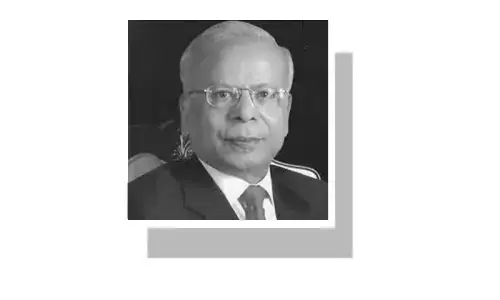
Pakistan's UN Ambassador Abdullah Husain Haroon says 'veto has been used or abused for national interests rather than to promote common interest and collective action.'
Speaking at a debate in the United Nations on the reform and expansion of the 15 member Security Council Tuesday, Pakistan's UN Ambassador Abdullah Husain Haroon declared 'in the democratic reform that we are pursuing, there is no place for individual privileges of any kind including permanence or veto on a national basis. We believe no individual country should claim or can be given such a privilege.
'Veto is a core issue in the reform discussion. It is linked to the membership question, it being a primary characteristic of the 5 permanent members. Veto is also intrinsically linked to the Council's working methods and the decision making process. Many of the problems of the Security Council that we intend to address through its reform are attributed directly or indirectly to the veto power. Reform of the veto should therefore be an integral part of a comprehensive package,' Haroon said.
He said 'regardless of any historic justification which may have existed in 1945 and which may no longer be relevant today, a large majority of membership is opposed to the concept and practice of veto.'
Pakistan's chief delegate observed 'veto has been used or abused for national interests rather than to promote common interest and collective action for the maintenance of international peace and security.
The frequent use of veto led to virtual paralysis of the Security Council during the Cold War. As we know, major issues remain unresolved on the agenda of the Security Council because the parties were assured by one or the other of the permanent members to use the veto. It is true that the exercise of veto has declined since the 1990s but its very existence and threat continue to affect the work of the Security Council.
Veto is in essence non-democratic because it is against the principle of sovereign equality of member states. Experience tells us that veto impacts negatively on the effectiveness and efficiency of the Council. Along with a vast majority of members, our preference is for the abolition of the veto right. However, the membership is faced with the unfortunate reality that any proposal to abolish or severely restrict the veto is itself likely to be vetoed.'
However, Haroon said that this does not mean that nothing should be done with regard to veto. There are several proposals aired today to limit the use of veto and to exclude certain situations from the scope of application of the veto.
'There is growing sense today that veto should not be exercised in certain situations such as genocide, war crimes and crimes against humanity. There is a strong case to also bar the use of veto in situations involving external aggression, foreign occupation and self-determination. As part of negotiations, we are prepared to consider measures, involving voluntary restraints and possible Charter amendments to address these aspects.'
Besides he said there are suggestions to over-ride veto by a certain majority in the General Assembly or in the Security Council itself. In principle, we can support such measures though their ratification remains improbable.