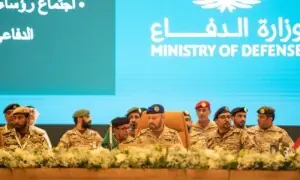
The third round of the joint Pakistan-China anti-terrorism exercises that ended on Wednesday consisted of more than military manoeuvres; it symbolised the deepening of cooperation between the two countries on the vital and global issue of terrorism. The weeklong exercises by special forces from the two countries have a background.
For a long time, China battled the forces of militancy and terrorism in Xinjiang, which borders Pakistan. Often terrorists from Xinjiang have sought money and arms from anti-China forces to foment trouble in the Muslim-majority province. At the same time, terrorists of different hues have targeted Chinese nationals and engineers working on various projects in Pakistan. We know, for instance, that the Taliban, especially the Mehsud tribal militants, were responsible for kidnapping and murdering a number of Chinese engineers, and there have been attacks on Chinese workers in the Hub area. These attacks cast doubt worldwide, even in China, on Islamabad's ability to combat terrorism and ensure the safety of the thousands of Chinese nationals in Pakistan.
The army's successful operations in Swat and South Waziristan gave a clear message to the world that Pakistan was not only serious about taking the terrorists head on, it had the capability and the will to root out terrorists from bases which they, and the world, thought were a 'safe haven' from which to kill and maim Pakistani men, women and children, and target Pakistan's foreign guests. The joint exercises, which coincided with President Asif Ali Zardari's visit to China, seem a recognition and acknowledgment on Beijing's part of Pakistan's positive role as a pivotal state in the war on terror.
Pakistan, of course, has anti-terrorism ties with several other countries, but these are not without problems. The US and western allies urge Pakistan to 'do more' and accuse Islamabad of adopting a soft line on the Taliban, ignoring the fact that no country has suffered higher civilian and military casualties than Pakistan. As for South Asia, the Saarc anti-terrorism mechanism has been a non-starter, and anti-terrorism cooperation between Islamabad and New Delhi has to be seen in the context of the overall relationship between the two countries, characterised as it is by mistrust. New Delhi accuses Islamabad of encouraging anti-India militants, while Pakistan has on occasion accused India of involvement in acts of terrorism in Balochistan. With Afghanistan, the relationship is a subject unto itself. From this point of view, China's cooperation with Pakistan is free of mistrust and, for that reason, likely to deepen for the benefit of the two countries and the region.