0
0
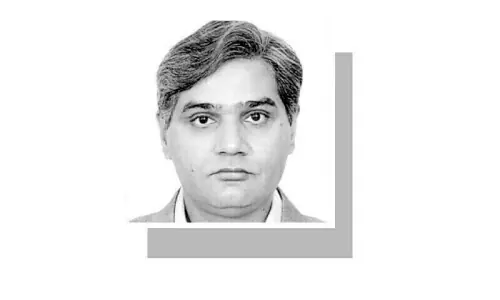
ISLAMABAD, Feb 26: On Tuesday, Justice Mohammad Anwar Khan Kasi assumed the responsibilities of Chief Justice of the Islamabad High Court (IHC), after being recommended for the position by judicial commission of Pakistan (JCP) in September.
Justice Kasi's tenure in the IHC, which he joined in January 2011, has been consistently been marked by struggles over seniority.
When he was elevated to the IHC from the Balochistan Judicial Service two years ago, Justice Kasi was considered the court's most senior judge, based on criteria established in April 1987.
He was assigned to Courtroom 2. A month later, however, the then Chief Justice Iqbal Hameedur Rehman, who has since moved to the Supreme Court, issued a statement declaring that because of seniority in age, Justice Riaz Ahmed Khan was the IHC's senior most judge. The number on Justice Kasi's courtroom was changed to 3.
In February 2011, he challenged the declaration in the Ministry of Law and Justice, which the IHC Act 2010 had established as the forum to settle such disputes.
The Ministry did not decide on the case immediately, although a document issued in November 2011 mentioned him as the IHC's most senior judge, a position maintained also by the JCP. IHC records, on the other hand, accepted Justice Riaz Ahmed Khan's seniority.
The law ministry did not file an opinion on the matter of seniority until nearly two years later, when, in October 2012, they denied Kasi's petition and accepted Riaz as the IHC's senior-most judge.
They also declined to issue notification of Kasi's recommendation to the court's Chief Justice position, which the JCP had filed the previous month, and which had been endorsed by the Parliamentary Committee on Judges Appointment.
In December, President Asif Ali Zardari turned to the Supreme Court for advice on the matter. On January 31, 2013, the Supreme Court declared Justice Kasi's appointment to the Chief Justice position to be valid.
The Supreme Court took the opportunity, however, to observe that the President and Prime Minister have no role in the appointment of judges.
President Zardari had, in October, rejected a JCP order confirming the service of Justice Shaukat Aziz Siddiqui and extending the term of Justice Noorul Haq N. Qureshi. This matter was resolved by the law ministry earlier in January, but the Supreme Court noted that after the passage of the 18th and 19th amendments, the president's authority in judicial matters was only nominal.
He was, the apex court said, "bound to accept and approve" the JCP's recommendations.