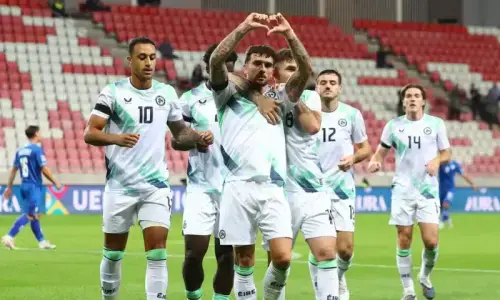
WHEN 98,000 Barcelona fans hold up red and gold cards during today’s home match with Real Madrid, forming the biggest ever version of the Catalan national flag, it will confirm that the first of this season’s ‘El Clasicos’ is about far more than just the historic rivalry between two legendary teams.
In front of a television audience of some 400 million people, nearly 100,000 voices in a sold-out Camp Nou are set to bellow “Independence! Independence!” at two carefully coordinated moments during the match.
Not since Catalan flags — the red and gold striped senyera — were smuggled into Barcelona’s precipitous home in December 1975, weeks after the death of dictator Gen Francisco Franco, have the twice-yearly encounters between Spain’s two most famous teams been so dramatically politicised.
That occasion was one of the first mass expressions of Catalan nationalism since the Spanish civil war, and an act of defiance towards those who inherited Franco’s powers. This year it comes as separatist fervour slowly spreads across the wealthy north-eastern region.
Surprised by the success of a massive, peaceful independence march that brought around 10 per cent of Catalans to the streets of Barcelona last month, regional premier Artur Mas has called early elections for Nov 25.
The vote is seen as a plebiscite on independence, though voters are waiting to see how explicit the manifesto of Mas’s nationalist Convergence and Union coalition will really be. With 51 per cent of Catalans now backing independence and Mas promising some kind of referendum, the pre-match political atmosphere is overshadowing stars such as Barça’s Leo Messi and Real Madrid’s Cristiano Ronaldo.
Fans will shout for independence at exactly 17 minutes and 14 seconds into each half — an allusion to 1714, the year Catalonia lost many of its historic rights due to backing the wrong horse in a fight for the Spanish crown.
Security is being beefed-up for the visiting team, which is seen by some Catalans as representing the centralist powers of Madrid — real being Spanish for royal — and popularly associated in the minds of Barça fans with Franco. “It will be much stronger this time,” a spokesman for Catalonia’s regional police force told Barcelona’s La Vanguardia newspaper. “This match is not like previous clasicos.”
But key questions remain for football-mad Catalans who support independence: should their team drop out of the Spanish league? And if so, would the club — whose current squad is considered among the finest ever assembled — be content to play against the poorer competitors of a new Catalan league?
Club president Sandro Rosell has defended self-determination. “When Catalans decide their future, Barça will be at their side,” he said recently. “We will always defend our roots and the rights of peoples to decide their own future.”
But what league will it play in? “I have no doubt that Barça will keep playing in the [Spanish] liga,” he said. — The Guardian, London