0
0

ISLAMABAD, Dec 26: The World Bank has called upon Pakistan, India and Bangladesh to end subsidies on power with a view to remove their fiscal imbalances.
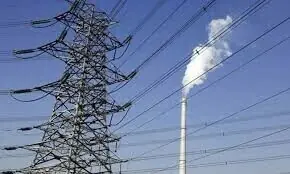
In its “Annul Report 2002”, released here on Thursday, the World Bank said that there was a need for power reform in South Asia. “In virtually every country of South Asia, but particularly in Bangladesh, India, and Pakistan, large subsidies for power have become the single largest source of fiscal imbalances”.
Reduction of these subsidies, the Bank urged, is an essential step to restoring national and substantial fiscal balances and to freeing resources for much-needed investments in infrastructure and social services.
In addition, availability of reliable power is a key constraint to private sector investments and activities, and reduces opportunities for rural employment and growth.
The report said that in Pakistan a newly-expanding Bank programme has supported institutional reforms through analytical work, advisory services, dialogue, and lending of $800 million for fiscal 2002, including a banking sector credit of $300 million.
Institutional reforms have focused on financial management, decentralization, tax reform, reorganization of the central bank, and corruption, all captured in the Country Assistance Strategy (CAS) presented to the Board in June 2002 and designed to support the implementation of Pakistan’s poverty reduction strategy for the next three years.
South Asia, the report said, is a region with tremendous political, religious, ethnic, and linguistic diversity. With a population of 1.4 billion, South Asia has the world’s largest concentration of poor people and some of the worst human development indicators, particularly for women.
The economic and social progress of this region is of significance to the entire world and to the achievement of the Millennium Development Goals.
While the region’s growth performance has continued to be respectable in the aggregate at around 5 to 6 per cent for over a decade and 5.4 per cent for 2001, it is still below South Asia’s potential.