0
0

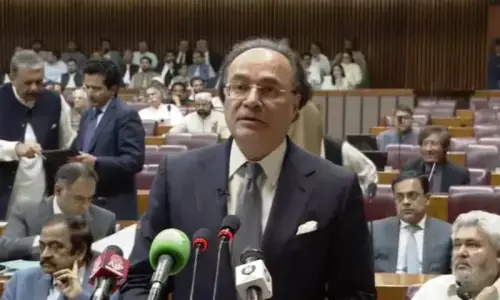
ISLAMABAD, June 1: Finance Minister Dr Abdul Hafeez Shaikh unveiled budget proposals for fiscal year 2012-13 in his speech at the National Assembly on Friday. The following is the text of Part II of his speech.
“Madam Speaker,
Let me now turn to the Part-II of my speech which relates to tax proposals As a country, we have not been successful in mobilising revenues. Success on this front has eluded all governments. Consequently, our tax system is characterised by following features:
The overall Tax-to-GDP ratio is less than 10pc (FBR at 8.6pc, overall at 9.6pc in FY11); Only about three million people pay income tax; about 50pc of registered corporate taxpayers and withholding agents file tax returns; only around 100,000 persons are registered under sales tax; under-invoicing and undervaluation have become a norm in our business practices; collusion between the taxpayers and tax collectors persists despite reforms.
We are acutely aware of the centrality of revenue mobilisation in country’s economic development and sovereignty. For this reasons, we have thus taken difficult decisions to broaden the tax net, to bring in sectors that were enjoying exemption, to identify new taxpayers and to make sure that the rich abide by law and contribute towards achieving this very important national goal.
Our government has collected an unprecedented amount of taxes during its tenure and particularly during the last two years.
This success is the result of the resolve of the government and the cooperation of the business community. The good news is that the overall Tax-to-GDP ratio is expected to improve from 9.6pc in 2010-11 to 10.3pc in the current fiscal year. A lot more needs to be done to build upon this good result.While we have tried to meet the national goal of raising revenues, we have also ensured that this is achieved without extra burden on the existing honest taxpayers. We do not want those who are paying to be burdened further.
We want to lessen the load on the honest tax partners. In fact, our approach is to reduce taxes and rates so the people and businesses are not faced with too many taxes, or high rates.
We only want to go after those who are powerful, well connected, and well organised and simply do not pay taxes at all. Let me share the good news with all honest taxpayers — salaried employees, individual businesspersons, corporations, — there is no extra burden on you. There is only relief for you. You have done your duty to be an honest taxpayer. We will now do our duty to give you relief. The government has ensured that the interests of the salaried class and public servants are protected. Every year, we have increased salaries, allowances, pensions and other benefits of government employees. We have also given tax cuts to the salaried persons and tax payers in the lower brackets.
Let me draw your attention to our provisions for Income Tax. In 2009-10, we increased the basic income tax exemption limit from Rs100,000 to Rs300,000, benefiting 1.2 million taxpayers in the lower brackets.
Last year, we raised this exemption to Rs350,000. In continuation of this fiscal support to the salaried class, the basic exemption limit for Income Tax is being further enhanced to Rs400,000 this year. Similarly, the exemption limit for business individuals and Association of Persons (AOPs) is also being enhanced to Rs400,000. This will benefit many taxpayers.
We have also decided to reduce the tax slabs to five only. Importantly, a major relief will be that only the portion of income exceeding a tax bracket would be charged at the higher tax rate. A taxpayer with an income of Rs35,000 per month previously paying Rs10,500 would only pay Rs1000 as tax. Apart from fundamentally simplifying the income tax system, this measure will provide relief of Rs8billion and benefit all existing income tax payers by reducing the effective income tax rate.
Under the present scheme of taxation, if an employee obtains a loan from the employer at a concessional rate, it is taxed at 13pc. In order to facilitate such employees, it is proposed that such loans up to Rs500,000 shall be exempt from income tax.
Loans above this limit shall be taxed at the maximum rate of 10pc.
As a relief measure to pensioners, amount received from approved income payment plans or annuity plans invested from any balance of voluntary pension schemes upon retirement will be exempt from tax if invested for a period of 10 years.
The tax collection has improved due to the cooperation of law-abiding businesses and individuals. The government appreciates them. To recognise them, a taxpayers’ Honour Card is being introduced. It will entitle its holders to concessions and facilities at various public and private forums, such as Nadra, Passport offices, Airports, Customs, Immigration, FBR and other public offices. FBR will also honour them by displaying their names on its official Web Site.
We want to give incentives in income tax to promote business activity and lessen the burden on our business. I turn to some of the important measures. These represent the acceptance of demands from the chambers of commerce and business community.
Under the existing income tax structure, the businesses are being taxed at the minimum rate of 1pc of their turn-over, even if they are reporting losses. To mitigate the hardship faced by registered businesses the rate of minimum tax on turn-over in this budget is being reduced from 1pc to 0.5pc. We should consider moving away from this method of collection entirely in the near future.
The government wants to phase out the presumptive tax regime (PTR) in three years. We are thus reducing the rates of tax from 5pc to 3pc or commercial importers, from 1pc to 0.5pc for exporters and from 3.5pc to 2.5pc for suppliers to give them the incentive to opt out of the PTR.
Withholding tax on profits paid on intra-group debt is being abolished. Currently there is a withholding tax on cash withdrawals if they exceed Rs25,000 per day. This limit is being enhanced to Rs50,000 per day.
To rationalise the rates of depreciation, the value of vehicles is being enhanced to Rs2.5 million, while the initial rates for new buildings are being reduced to 25pc.
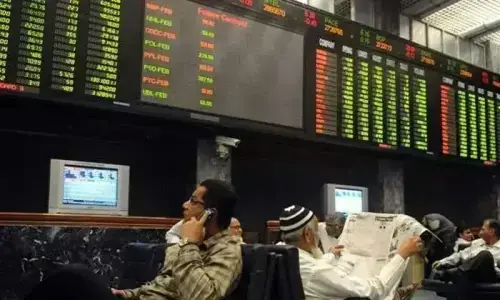
Capital markets are important for economic development of a country. To develop them and give confidence to the investors, the changes made through the Finance (Amendment) Ordinance, 2012 may be incorporated into the Statute through the Finance Bill.To encourage the capital markets, exemption on the profit and gains of a Venture Capital Company and Fund is being extended up to the year 2024.To promote investment in securities and insurance, the limit of investment as a proportion of taxable income is being increased from 15pc to 20pc and from Rs500,000 to Rs1 million, which ever is lower. The required retention period of shares is being reduced from three years to two years.
To encourage a competitive market for retirement schemes, transfer of funds between retirement funds will be exempt from tax. Further, retirement funds shall be exempt from withholding tax provisions on capital gains tax.
Dividends received by banks from money markets and income funds will be taxed progressively over a period of two years as normal business income. Dividends will be taxed at 25pc in tax year 2013 and at 35pc from tax year 2014 onwards to eliminate tax arbitrage.
To bring certain undocumented sectors into the tax net, manufacturers are being made withholding agents to collect 1pc adjustable tax on sales made to distributors and dealers.
Sales Tax
This government has reformed the general sales tax system last year, by eliminating zero-rating; reduction of the multiplicity of rates; and expanding coverage to all sectors except food, health, and education. This process of reform must continue, to realise the full potential of this task.
To avoid multiplicity or rates and decrease the burden on the consumers, all GST rates above 16pc are being brought down to 16pc.To discourage fraudulent refunds and streamline local supply chains in plastic, sprinkler, drip and spray equipment, mono filament yarn and net cloth, and remeltable scrap, it is proposed to eliminate zero-rating of these items. These items shall, however, be exempted from sales tax.
Local waste paper is one of the major inputs used in the manufacturing of paper. The waste paper is collected and supplied by the unorganised sector, leading to a high rate of abuse through a market for flying invoices. To curb this practice, it is proposed to exempt local supply of waste paper from sales taxes.
Cotton-seed is zero-rated while cotton-seed oil is exempt from sales tax. The mills producing cotton-seed-oil are, therefore, not required to issue any sales tax invoice and their production remains undocumented. The oil and ghee manufacturing units using undocumented purchases may suppress their production to evade sales tax.
It is proposed to zero-rate cotton-seed-oil to keep it in the documented sector and provide level-playing field to the tax compliant oil and ghee manufacturing units.
The current sales tax of the steel sector, fixed in 2008, is at the rate of Rs6 per unit of electricity consumed. To harmonise it with the current market prices, this rate is being enhanced to Rs8 per unit of electricity consumed.
Smuggling of goods causes injury to the local industry, and discourages legal imports. High rates of duties and taxes on these goods provide incentive for under-invoicing. It is being proposed that sales tax on black tea be reduced from 16pc to 5pc to encourage legal import of tea.
Federal Excise
To bring prices down and give incentives to the private sector, the government intends to phase out Federal Excise Duty (FED) in the next two years. To ensure this, FED was abolished on 15 items, last year, and the rates were brought down on many more.
The government intends to further eliminate FED on the additional 10 items, including base lube oil, lubricating oils, filter rods, and skin care products.
The dairy industry has great potential in Pakistan. Pakistan is the fifth largest producer of milk in the world. But a very large quantity of local milk is never processed. To promote investment in dairy development, it is proposed to abolish Federal Excise Duty leviable on livestock insurance.
To develop capital markets, FED on services rendered by asset management companies is also being abolished.
To boost the construction activity and generate jobs, last year, the FED on cement was reduced from Rs750 per metric ton to Rs500 per metric ton. This year, it is being further reduced from Rs500 per metric ton to Rs 400 per metric ton.
FED is leviable on foreign travel to or from Pakistan. However, collecting FED on foreign travel into Pakistan is practically difficult and not in conformity with international best practice. Therefore, it is proposed that FED may be collected on embarkation of passengers from Pakistan.
Custom Duty
Relief Measures: The government wants to reduce the tariffs, simplify procedures and create a conducive environment for boosting the economic activities. In order to reduce the prices and to provide relief to general public, the highest tariff rate is being reduced from 35pc to 30pc.
Education is the main priority of the government. Therefore, to make text-books, exercise books, pencils, pens and inks available at cheaper prices, customs duty on 18 raw materials and nine components for manufacturing of stationery items are being exempted.
New tariff headings are being created in the Pakistan Customs Tariff, to align our tariff structure with export partner countries (e.g. US, EU). This measure shall eliminate operational problems of exporters, particularly textiles.
The government is fully aware of the hardships being faced by the people of Pakistan because of energy shortages. To mitigate people’s suffering, it is being contemplated to provide fiscal relief on the import and installation of alternate energy sources, UPS and generators.
Promotion of the construction industry generates economic activities in 38 downstream industries. To promote the use of scrap of rubber and shredded tyres as a substitute fuel by manufacturing plants, such as cement, duty on scrap of rubber and shredded tyres is being reduced from 20pc to 10pc.
To ensure availability of medicines at affordable prices, customs duty on 88 pharmaceutical raw materials is being reduced from 10pc to 5pc.
To promote energy-efficient hybrid electric vehicles (HEVs), the rate of duty and taxes presently applicable to HEVs and their batteries is being reduced by 25pc.
In order to encourage legal import of self-copy and self-adhesive papers, their high rate of customs duty is being reduced to 10pc.
Administrative Measures
To align Pakistan Customs Tariff with international conventions, it is being updated in conformity with the latest WCO nomenclature. New departments are being created in customs to deal exclusively with transit trade issues, including the prevention of smuggling.
To separate the judicial functions from the executive in customs, offices for adjudication are being created in the customs department to address this demand.
The government provides incentives to the local industry through reduced rates of import duties through SROs. These complicated procedures are being simplified and the anomalies are being rectified. These measures will reduce the cost of doing business.
Concluding Remarks
We have given a budget that will build hope and lay the foundation of a better tomorrow in which not only economic stability will be maintained but growth will be accelerated. Our young population is our assurance for a strong and prosperous Pakistan, provided we can create job opportunities for the use of their capabilities.
Growth is the answer and this will be our main focus during the year. There is no limit to the economic potential of Pakistan. The challenge is to create the enabling environment in which this can be realised. May Allah bless this country and our people.
Ameen!
Pakistan Zindabad”