0
0

ISLAMABAD, May 31: Whatever hell his apparently desperate political foes may play, Prime Minister Yousuf Raza Gilani will mark a milestone in parliament on Friday by making it to his coalition government’s fifth budget.
On the eve of the simultaneous budget sessions of the National Assembly and Senate, all signs were that the credit the ruling Pakistan People’s Party (PPP) claims for the feat will not go unchallenged.
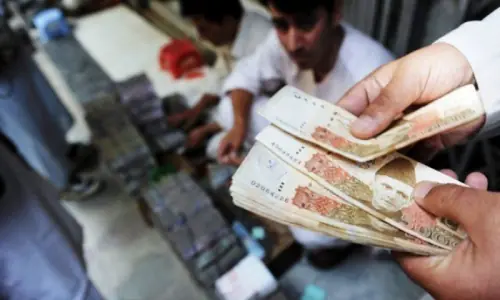
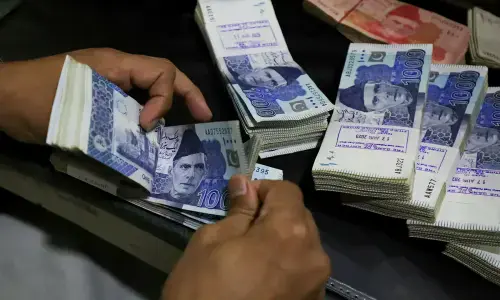
Finance Minister Abdul Hafeez Shaikh is likely to face a lot of noise from the main opposition party when he unveils the budget for fiscal 2012-13 — which will also be PPP’s election year budget — in the lower house at 5:30pm, before its transmission to the upper house.
But it was not clear whether the threatened protests by the lawmakers of the Pakistan Muslim League-N (PML-N) would be as disruptive as in the last National Assembly session, or more, or less, amid a rare warning also from Speaker Fehmida Mirza of a possible disciplinary action.
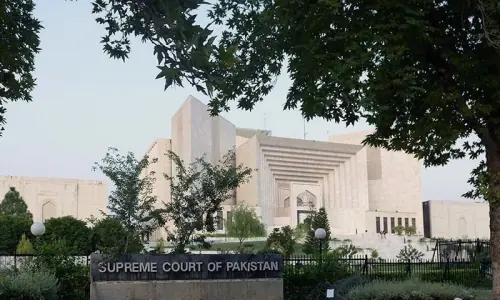
The previous protests, in a controversy over the prime minister’s conviction for contempt of court and a symbolic sentence passed by a Supreme Court bench, were the noisiest of the present parliament — in which PML-N members chanted “go Gilani, go”, tore up documents, besieged the dais, and some of them threw torn papers towards the speaker’s chair — while party senators staged only walkouts in the upper house.
The party, which stood isolated in that hard stance and was not supported by smaller opposition parties, has vowed protest in the budget session without making clear whether it would also continue pressing its initial demand that the prime minister resign even after the Speaker’s ruling last week that no question of his disqualification as a member of the house had arisen because of the sentence.
“There will be ‘bharpoor’ (vigorous) protest,” PML-N information secretary Senator Mushahidullah Khan told Dawn on Thursday and, apparently hinting it would be a show within the two houses rather than a mere walkout, added: “The field will not be left open.”
But he said the modality of the protest would be finally decided by the PML-N parliamentary party meeting to be chaired by the Leader of Opposition in National Assembly, Chaudhry Nisar Ali Khan on Friday before the start of the budget session.
It is to be seen whether the PML-N uses the session to target the speaker for her ruling sparing the prime minister of facing any prospect of disqualification for refusing to write to Swiss authorities to reopen disputed money-laundering cases against President Asif Ali Zardari on grounds of presidential immunity.
The speaker, whose rulings, under house rules, cannot be challenged in any court of law or disobeyed inside the house, has already taken notice of the allegedly objectionable conduct of at least two PML-N members of the National Assembly during the last session. But she told reporters on Wednesday that Chaudhry Nisar and two other PML-N members had not yet complied with her invitation sent to them to meet her to explain what happened in the last session.
On Friday Mr Gilani will become the first prime minister in Pakistan’s chequered history to present all the five budgets of the five-year prime ministerial term, and his government, whose tenure is to run out in March next year, has promised that the new budget — ahead of the next election — will be more people-friendly than the previous four budgets, with focus on meeting energy shortages, provision of jobs to youths, non-imposition of new taxes, and making its flagship BISP more effective.
The five years of the previous government, under military president Pervez Musharraf, of Pakistan Muslim League-Q, which is now an ally of the PPP, changed three prime ministers.
While several prime ministers held office for only brief tenures in the early years of Pakistan, military rulers like Field Marshal Ayub Khan and Gen Ziaul Haq ran much longer presidential systems for 10 and 11 years, respectively, which were intervened by five-and-a-half years of the PPP rule during which party founder Z.A. Bhutto served as president for over one-and-a-half years and as prime minister for four years.
And after the death of Gen Zia in a plane crash in 1988, PPP leader Benazir Bhutto and PML-N leader Nawaz Sharif alternated as prime ministers twice each but their terms were curtailed by controversial dismissals by presidents.