1
1

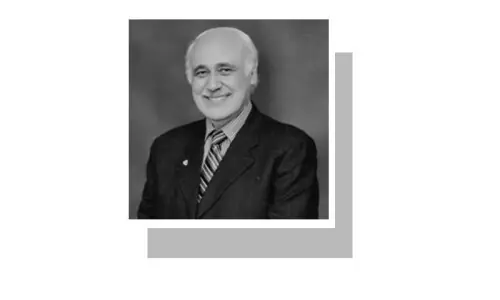
IN an impassioned lecture, under the auspices of the Pakistan Society of Development Economics some days ago in Islamabad, the deputy chairman of the Planning Commission, Dr Nadeemul Haque, tried to swing back the pendulum of development strategy in favour of growth.
Some five decades ago, his illustrious predecessor, the late Dr Mahbubul Haq, had set it in motion. The pendulum has hurtled back and forth (in a somewhat disharmonic motion) several times since.
Dr Nadeemul Haque’s lecture was largely based on the New Growth Framework, a document crafted by his colleagues at the Planning Commission. However, the lecture itself was full of scintillating wisdom and witticisms characteristic of him, bringing a breath of fresh air into what is often a sterile debate. This article intends not merely to highlight the salient features of the talk, but also to provide a perspective on planning and development in Pakistan.
The economic and political landscape that faced the planners in the 1960s was vastly different from the current one. This was reflected in the lecture, despite its deafening silence on political economy matters. When the young Cambridge-/Yale-trained economist, Dr Mahbub, appeared on the planning horizon development economics was in its infancy.
Planning inherited a Soviet New Deal-Keynesian-Harrodian flavour, notwithstanding the Cold War.
Pakistan was firmly in the US-led Cold War camp and had signed a US-Pakistan military alliance while Gen Ayub had staged the first military takeover. That gave the Planning Commission enormous powers to mobilise resources for development, especially with generous US aid and Gen Ayub’s direct support, enabling it to carry out the first real spurt in industrialisation of the country. Dr Mahbub helped Pakistan become the epitome of fast growth in the developing world — much as BRICS are now.
In contrast, while the LSE-Chicago trained Dr Nadeem — who entered the Planning Commission as deputy chairman on completion of his long career with the IMF — may not be ready for his illustrious predecessor’s mantle, he faces considerably larger challenges, both economic and political.
Ties with the US, linked to the war on terror, are unravelling, the economy is in dire straits, and the 18th Amendment has shorn the central government of the already diminished fiscal space available. These factors have had unequivocally adverse consequences for mobilisation of resources for development, crucially impairing the Planning Commission’s ability to step up — or even maintain — the past rate of growth, which was averaging about half its potential in the last few decades.
A resort to some form of growthmanship is therefore not uncalled for, even though it is hardly a Mahbubian moment. Dr Nadeem rightly lamented the lack of support of both professional economists and donors for giving growth a central place in the development agenda.
However, resource mobilisation constraints have made it imperative for Pakistani planners to look for ways of doing more with less, rather than await improvement in the tax-GDP ratio. For Dr Nadeem, this is being on the wrong track, when, according to him, there was massive, if not well-documented, evidence that the government’s footprint on the economy was too heavy.
For the neoclassical economist, the new growth theory, with its emphasis on innovation, rather than capital accumulation, provided the inspiration to turn things around and make a virtue out of the necessity to shun the brick-and-mortar type of physical investment, with a lot of consequential corruption and rent-seeking. Instead, he argued forcefully for relying on ‘software’, rather than ‘hardware’ investment. However, this is a specious dichotomy, since most software improvements come ‘embodied’ as some form of hardware or physical capital. Total factor productivity (TFP) is a measure of an economy’s ability to produce more from the same amount of resources over time. This indicator, along with many other socioeconomic indicators, is very low in Pakistan, with technology contributing less than 20 per cent to GDP growth. The main culprit for this, according to Dr Nadeem, is a bloated public sector and dysfunctional markets, both stemming from ‘bad governance’, the economists’ favourite whipping boy.
Indeed, while the critique of the functioning of the government is well-founded at a micro-level, decrying the role of the government in overall economic activity amounts to throwing out the baby with the bathwater.
The following cautionary quote from the recent (2008) report of the World Commission on Growth and Development signed by a galaxy of experts, including two Economics Nobel laureates should temper such a stance: “Just because governments are sometimes clumsy and sometimes errant does not mean they should be written out of the script. On the contrary, as the economy grows and develops, active, pragmatic governments have crucial roles to play.”
The most seductive, though not least controversial, was Dr Nadeem’s obsession with cities, the kingpin of his New Growth Framework. He cites considerable evidence to suggest that the centre of growth is shifting to the cities, but to romanticise the cities as the be-all and end-all of development is too enormous a leap of faith besides being a grand oversimplification.
In Pakistan, the issues of geographical location and agglomeration, neglected in the past, require a less cavalier approach in view of regional diversity and a historical baggage of inequity. Also, the implied rolling back of agriculture and rural development raises doubts about the strategy’s ownership by a still very large section of the population. The strategy also unwarrantedly assumes that poverty and regional disparities will disappear through a strong trickle-down effect of faster growth.
Despite his commendable effort to break new ground, Dr Nadeemul Haque’s New Growth Framework lacks a historical and a political economy perspective.
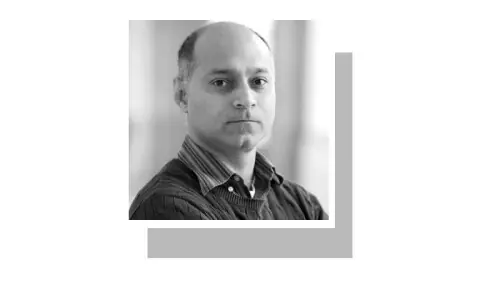
The writer is a former professor of economics at the Quaid-i-Azam University, Islamabad.
smnaseem@gmail.com