0
0

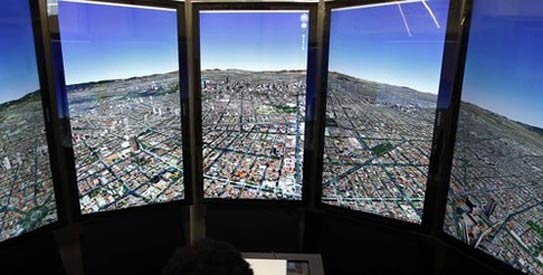
A combination of geographic and genetic data is showing how typhoid fever spreads, and could be used for mapping other disease patterns, a study has reported.
Researchers used DNA sequencing, global positioning system (GPS) and Google Earth technologies to track typhoid transmission in Kathmandu, the rapidly growing capital city of Nepal, where thousands fall ill with typhoid fever each year.
They found disease clusters around public water spouts — pipes that tap into natural water sources — which suggests that the main transmission route is environmental, rather than between people.
“This is the first time that bacterial genotyping techniques have been associated with patient location to map the spread of infectious disease,” said Amit Arjyal, co-author and a clinician at the Oxford University Clinical Research Unit–Nepal (OUCRU-NP).
“We know that typhoid is a water-borne disease, but how exactly it spreads is not well understood — is it from close contact, dirty food at home, unboiled or unfiltered water at school, or street food?”
The researchers isolated bacterial strains of Salmonella Typhi and Salmonella Paratyphi A from blood samples of more than 700 typhoid outpatients at a Kathmandu hospital between 2005 and 2009. They then visited the patients' homes and used GPS devices to map each genotype, uploading the data to Google Earth.
The results, published in Open Biology last week (16 October), show that most cases were seen in people living near water spouts, and those who lived at lower elevations, where water spouts are more common. The source was probably groundwater contaminated with faecal matter during the monsoon, the authors say.
“The age-old belief is that water spouts are pure and natural,” said Arjyal. But it is possible that underground sewer lines have contaminated water supply channels, he added.
The researchers also found a random distribution of bacterial genotypes on the map, which further suggests that the source of infection is environmental and not originating from single outbreaks and person-to-person transmission.
“The uniqueness [of the study] lies in the combination of mapping and genotyping to assess the most likely modes of transmission and to identify high risk areas and spatial risk factors, in our case water proximity and elevation,” said Stephen Baker, lead author of the paper and a researcher at OUCRU-NP.
“We are planning to apply it to other infections,” he added.
Gajanand Bhandari, an epidemiologist and programme director at the Nepal Public Health Foundation, agreed that genotyping could be useful in investigating the source of disease outbreaks.
“When Nepal was blamed for the cholera outbreak in Haiti earlier this year, genotyping would have helped to clearly identify whether the disease was really coming from Nepal,” he added.
But he said: “The techniques used in the study are quite sophisticated and costly. The question is whether we should invest in high-tech methods when basic research methods, such as statistical analysis, are not widely used.”