



 1
1

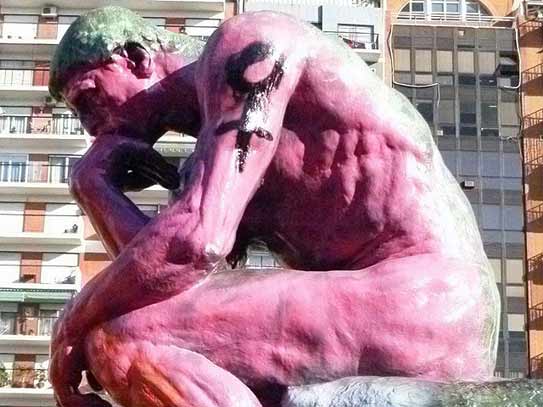
BUENOS AIRES: Art-lovers in Argentina are up in arms after a cast of Auguste Rodin's inspiring “The Thinker” sculpture was defaced by vandals only to suffer more potential damage as it was cleaned.
Crafted more than a century ago, the statue depicts a seated male nude, his chin resting on his hand, lost in thought. Considered a masterpiece of late 19th-early 20th century art, it is Rodin's most recognizable work.
The original bronze and marble statue is on display at Paris's Rodin Museum, home also to “The Gates of Hell”, the French sculptor's monumental masterpiece depicting a scene from Italian poet Dante's “The Inferno”.
“The Thinker” in the Argentine capital Buenos Aires is number 3, the third of 22 original sculptures, eight of which were completed from the original mold during Rodin's (1840-1917) lifetime.
Exhibited on a plinth in a main square in front of Argentina's national Congress building, the sculpture is a popular tourist attraction in the city, which is known, fittingly enough, as the Paris of Latin America.
But the beloved work was defaced last week, splattered by unknown assailants with paint and spraypaint -- an act of vandalism that elicited cries of outrage across this culture-loving country.
Public ire was aroused anew on Thursday, when it was discovered that someone had defaced the base of the statue with more graffiti, scribbling the name “Enzo” on one side of the pedestal.
“It's scandalous,” said Teresa de Anchorena, a member of a commission here tasked with preserving Argentina's heritage.
Officials as yet do not have a motive for the vandalism and have no known suspects.
Hoping to return the work to its former glory, the Buenos Aires government arranged to blast the statue with water to remove the paint, a course of action that left art conservationists aghast.
The aggressive cleaning technique, they said, may have done more harm than good “because irreversible damage could result to the original patination,” said art expert Cristina Lancellotti.
Bluish-green patina that forms on the surface of bronze objects over time because of oxidation gives the metal artwork its unique look and is considered an integral part of the world-renowned sculpture.
Authorities, anxious to prevent a repeat of the cultural sacrilege, are considering relocating the sculpture closer to the actual parliament building.
The Buenos Aires city council is also considering a new law to place a protective metal grille around the artwork.
Casts of “The Thinker” can be found around the world, including at Columbia University in New York City, the Rodin Museum in Philadelphia, and the Laeken Cemetery in Brussels.


























