0
0

Ghazal, probably the most popular genre of Urdu poetry, has many moods. Of them, the most prominent is love — both physical and metaphysical. But, according to some critics, love poetry should avoid the physical aspects of love or overt expressions of sensuality. Rather, it should try to emphasise moral or noble feelings instead. Or, at least, that’s how we differentiate between love poetry and the erotic.
This concept — or misconception, as Shams-ur-Rahman Farooqi puts it in the introduction of Khaatir-i-Maasoom: Urdu shaeri mein mehboob ki jinsiyet ka mutal’a — of ‘cleansing’ romantic poetry of sensuality, became popular after Hasrat Mohani’s suggestion that discussion of the lover’s physique or love’s physical aspects should be banished from poetry. It sounds paradoxical as Hasrat’s own poetry consists of verses that he himself labelled “fasiqana” (immoral).
But the problem is that it is not always easy to distinguish between love and amorous poetry as they often overlap. Some of Urdu’s well known poets — both classical and modern — are notorious for this kind of poetry.
In fact, Zameeruddin Ahmed, author of Khaatir-i-Maasoom and a critic and short story writer, thinks that most of Urdu’s love poetry is erotic. The book is a unique study of sensuality in Urdu poetry and discusses a subject that has not received the attention from critics that it deserves. Ahmed handles the delicate subject very tactfully and exercises restrain even in the selection of couplets to illustrate his arguments as Urdu poetry does not lack in what could be seem as vulgar. His own selection of words is also very artful. It must have been very difficult for Ahmed to prove his premise without quoting some truly erotic poetry but his careful yet precise approach has done the trick.
Urdu poetry verging on the erotic has traits that reflect the milieu it was created in. For instance, argues Ahmed, most of the poets are oblivious of their lovers’ sensual feelings and just focus on their own. They ignore, in ghazals in particular, how the lover feels about the physical dimension of love.
While ghazal has been widely used for love poetry, Urdu’s love poetry is not limited to ghazal alone. Many other genres, such as wasaukht, rekhti, geet, nazm and masnavi, too, have been used for love poetry. Ahmed has sifted through romantic poetry in almost all genres of Urdu poetry and concludes that some of it is truly at loggerheads with our cultural and social norms.
Masnavi, for instance, especially gives poets the licence to let their imagination wander into the world of erotica. Ahmed feels that while the ghazal gives only a faint idea of the lover’s personality and her sensual feelings, the masnavi presents the lover in the true spirit and tradition of Hindi poetry which depicts women as not only the sought after ones but also the ones who long for physical love. In masnavis, women often initiate the love affair. Even the fairies and female genies in masnavis fall in love with princes and are depicted as pining for love. In ghazal, he says, women are the sweetheart and men sing of them but in masnavis it is often the other way round.
Ahmed scoffs at poets who try to hide the sexuality of the lover or believe in platonic love. He criticises Abdul Majid Daryabadi who denounced masnavis as “immoral”. Ahmed believes Daryabadi’s approach is not literary. He accuses some other critics of “moral prejudice” too.
This is Khaatir-i-Maasoom’s second edition.
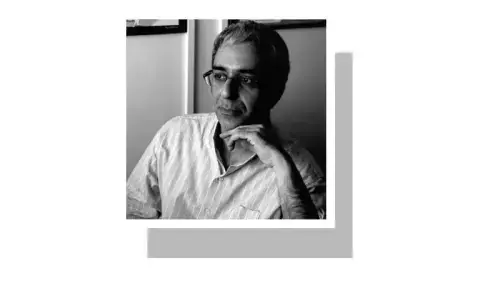
The reviewer is Assistant Professor of Urdu at the University of Karachi
Kaatir-i-Maasoom (LITERARY CRITICISM) By Zameeruddin Ahmed Scheherazade Press, Karachi 132pp. Rs180