0
0

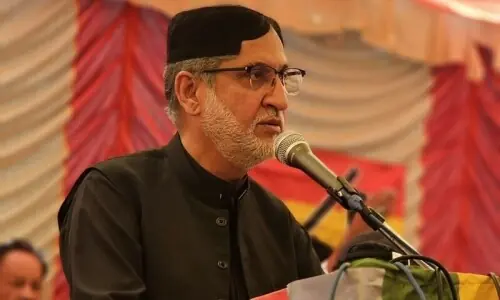
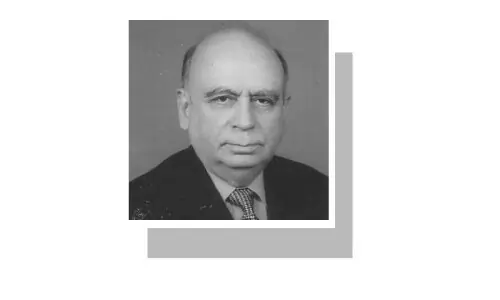
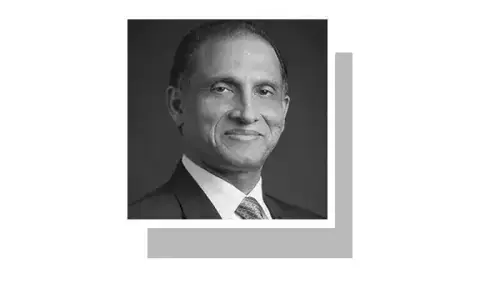
Internationally renowned Pakistani scholar Professor Khalid Bin Sayeed has passed away. He was a guide and mentor for a whole generation of scholars working on Pakistan. Like Rajni Kothari in India, Sayeed had the distinction of being the top political scientist of his country for half a century. Hailing from Hyderabad, India, Sayeed studied at the London School of Economics and McGill University and taught at Queen’s University in Kingston, Canada. His fame accompanied his journey across the three continents and beyond.
Sayeed’s academic approach was fairly dynamic. In his first major work, Pakistan: The Formative Phase-1857-1948, he set out to trace the origins of partition. The book established him in the academic circles focusing on South Asia.
His second book, Political System of Pakistan, explored social and political forces contending for power, along with the formal structure of state authority. He was in step with his contemporaries, Rounaq Jahan, Braibanti, Karl Von Vorys, Samuel Huntington and Herbert Feldman, inasmuch as political change in transitional societies guided his theoretical and empirical research.
On a personal note, I met Sayeed at the School of Oriental and African Studies (SOAS) in London. I was a student and he was a visiting scholar from Canada. In a seminar organised by Dr Zawwar Hussain Zaidi, Sayeed portrayed Jinnah as an artist and Pakistan as an act of creation. Sometimes he would cast a nostalgic — almost romantic — glance at the national scene in Pakistan. His political imagination, much as his research, focused on his homeland.
Once Hamza Alavi gave a seminar at SOAS. Alavi’s research drew on sociological investigation, class analysis and theoretical models. In a sitting after the seminar, both discussed the power structure of Pakistan and the nature of conflict at various levels in society. Sayeed’s short stay at SOAS exposed him to the British academia, which had nurtured him as a scholar in his younger days.
Sayeed’s third book, Politics in Pakistan: Nature and Direction of Change, made yet another leap forward in the sense that he made a more extensive use of current theoretical debates about class and state. He dabbled in the ‘new-left’ writings, and even explained Z. A. Bhutto’s rise to power on the pattern of Napoleon Bonaparte III in France in the mid-19th century, as conceptualised in The 18th Brumaire of Louis Bonaparte by Karl Marx. Sayeed provided a fresh interpretation of the 1977 anti-Bhutto movement as a lower middle class phenomenon from which the working classes had generally stayed away.
After several years, I met Sayeed in Islamabad. He was, as before, moving around with a writing pad and a pen in hand, meeting university faculty, listening to people patiently, and taking notes in short hand. The man was an indefatigable researcher. He was acutely conscious of the fact that he needed to hear the analysts’ views directly, along with their biases and prejudices. He seemed to be intent on moving forward to new vistas of scholarly research in theoretical and methodological terms.
Sayeed also studied the emerging phenomenon of Islamic movement in the Muslim world after the Iranian revolution. A stint in Saudi Arabia further pushed the frontiers of his religious inspiration. When I met him in Oxford in 1989 at a conference at the Oxford Centre for Islamic Studies, Sayeed was deeply interested in the emergent ideological discourse in the Muslim world.
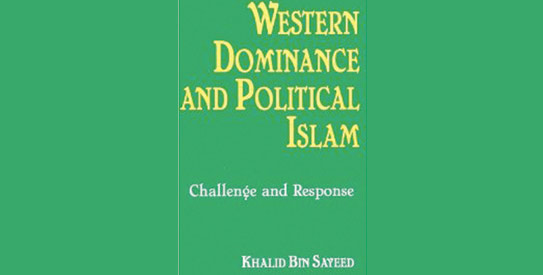
In Western Dominance and Political Islam and his other later works, Sayeed looked at the Muslim world and Pakistan in the midst of an Islamic movement, ideologically, politically and culturally. He drew on the innate civilisational and philosophical dimensions of society, as it grappled with insecurities of the contemporary world. Some found him drifting too far away from his scholarly moorings in the Anglo-American tradition of scholarship. Others felt that he could not and should not stay away from the forces shaping the destiny of his nation.
K. B. Sayeed’s legacy can be defined in terms of scholarly rigour, readiness to embrace new ideas and thought patterns, balance between theory and methodology, and a literary — almost artistic — style of presentation. Sayeed has a lasting position in the annals of scholarship on Pakistan.