0
0


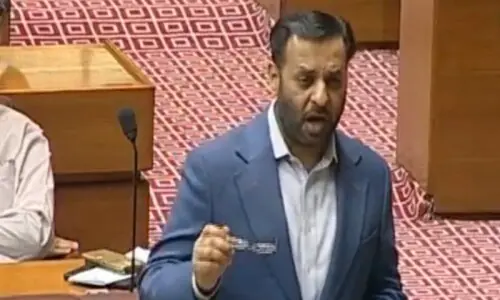
ISLAMABAD: The National Assembly was informed on Monday that 321 industries closed down in Khyber Pakhtunkhwa and Balochistan during 2009-2010, mainly because of the law and order and security situation.
Federal Minister for Industries and Production Mir Hazar Khan Bijarani told the house during the question-hour session that some other factors such as financial, management and marketing problems and lack of entrepreneurial skills had also contributed to the closure of industrial units.He said the data about Sindh and Punjab had yet to be received.
Giving a breakdown of the industries closed in KP, he said 138 industries were closed in Swabi, 102 in Hattar industrial estate of Haripur, 63 in Peshawar district and four in Nowshera. Fourteen industries were closed down in Balochistan, he added.
Answering a question, the minister said the decision to allow the import of five-year-old cars had been taken after thorough deliberations and assured the house that it would not affect the local industry.
“If our new cars cannot compete with imported old cars, it would be something questionable for the local industry,” he remarked.
He said that locally manufactured cars had witnessed an increase in the price from 18.03 per cent to 50.78 per cent since March 2008. The reasons cited by manufacturers for increase in the price were depreciation of rupee against Japanese yen (83 per cent) and US dollar (37 per cent) and introduction of new models by Indus motors and Honda cars in 2008-2009, he added.
Mr Bijarani said that a new industrial policy enshrining measures to address issues impeding the manufacturing sector's structural growth was on the anvil.
He said consultations with various sectors had been made to prepare the draft policy.
The draft policy, he said, focused on employment generation, productivity growth, product diversification, competitiveness and moving towards knowledge-based hi-tech industry.
He said the draft policy would be finalised soon and submitted to the cabinet for approval.
Federal Minister for Textile Industry Rana Farooq Saeed Khan, in reply to a question, said that electricity and gas loadshedding had badly affected the textile industry. He said his ministry had no direct control over gas and electricity, but in collaboration with stakeholders it had tried to ensure uninterrupted supply of gas and electricity to the industry.