0
0

The Punjab Institute of Language, Art and Culture (PILAC) has got another director-general from the District Management Group, fifth since its inception in some four years. First was an intellectual, poet and writer Shahzad Qaisar, who recently retired from the Prime Minister's House. He is a talented person and he first tried to oblige the south Punjab by extending financial grants to Seraiki home-based organisations. This was the tradition set by the Punjab cultural department which preferred to dole out grants to such organisations which were home-based and had no regular offices and staff. Their second preference was those who reproduced the old books of poetry written by their elders before independence and the third category obliged by the information department were those who published just poetry and fiction and not the research work, new or old. Thus, the Punjab province had no such institute which could match the Sindhi Adabi Board. Shehzad also toed the same line but he left the PILAC after he was promoted to the next grade. For a long time there was no director-general and so no meeting of the board of governors could be held… actually no such meeting has held since 2005.
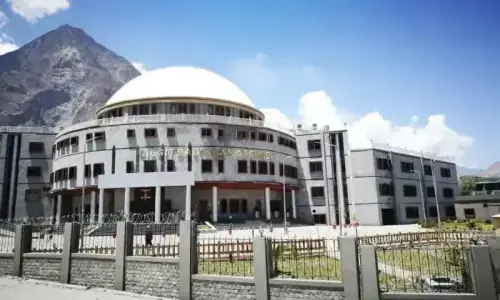
Meanwhile, the PILAC shifted to its own building — the Punjabi Complex at Qadhafi Stadium, which was completed in the shortest possible time. Perhaps no government building of that status has ever been completed in such a short time. Obviously, the then chief minister, Parvaiz Elahi, was personally interested in the project. It was a good beginning and according to the plan prepared on the lines of Shah Husain Cultural Centre conceived by the Majlis Shah Husain in the sixties.It included seminar hall, library, museum, cafeteria, publications wing plus publication of monthly magazine, research centre, language laboratory, writers' guest house and theatre hall. This was the project presented to the chief minister when the first meeting was held under his chairmanship.
Though the space in the PILAC was not enough but when shifted to Punjabi Complex, the activities were planned on the same pattern. The museum, library, publications, seminars and art classes started. At that stage, there was no director-general but the PILAC had also started FM Radio. Its cafeteria became a big attraction to writers and intellectuals who had been deprived of Pak Tea House. Monthly magazine also appeared with writings in all the dialects of the Punjab province. The contributors were paid for their writings. Some provincial level functions were also arranged but there was no director-general and the PILAC was being supervised by information secretaries… Taimur, Gondal and Orya Maqbool Jan. With the change of the government or before that a new uncalled for project was accommodated. This was Punjab-China Cultural Centre. This created a fuss and it still is a thorn in the PILAC body. It is a great burden on finances of the PILAC and the new director-general Mr. Afridi refused to pay the bills for the furniture for the Chinese Centre. The amount involved is about Rs3.5 million.
With the change of the government as is the traditional style the administration was changed on the ground that because of a function of so-called extremists at PILAC Hall, the puppet show in the nearby Arts Council was made the target of bombs (crackers). This time the director-general was Hasseb Athar, a DMG officer and information secretary was Orya Maqbool Jan. Perhaps the PILAC earned the wrath of the new government. Haseeb was transferred to Rawalpindi as commissioner and was called back after the burning of the Gakkhar Plaza, not to be posted as the PILAC director-general. Dr. Abbas Najmi, a teacher at the Government College University was appointed director in place of Dr. Shaista Nuzhat and publication of research books, monthly Trinjan and seminar activities were immediately suspended. The upcoming library was shifted to upper storey, the museum already in shabby condition was criminally ignored, the FM radio was closed down and work on Punjabi dictionary was also abandoned. Research students were not entertained and classes of music etc. were shut down. The place has no more attraction for writers. And then came one of the most senior DMG officers Mr. Niazi. But the conditions could not be changed and whatever was being done, it was exclusive with Dr. Niazi. The magazine was revived (not regularly) and every issue carrying with Niazi's articles on subjects he never touched in his life time. He just wanted to prove his qualification for the job. He also crowded the financially poor PILAC with new appointments. The Chinese Centre was centre of his main business which was a heavy burden on the Punjabi organisation. He restarted publication but without caring the rules or procedures. He published one collection of critical essays by a senior writer who in return dedicated his book to the “services” of Mr. Niazi, the so-called benefactor of Punjabi. Aftar Niazi, came Haroon also from DMG. PILAC was reduced to such a status that Haroon was director-general of the archaeology department and PILAC was his additional charge.
Haroon addressed a meeting of the local writers invited to suggest how to restart the activities at the Punjabi Complex. It was just an eyewash. There were lots of misunderstanding among the senior staff that no suggestion was liked by the managers. They treated even poet like Shah Husain as an ordinary local poet. They just could not think that Punjabi poets like two Farids, Bullah, Bahu, Waris, Mian Muhammad, Shah Husain all are the great stalwarts among the Sufi poets of other national and regional languages. Most of them are much senior even to the poets of the national language and almost all the poets of the regional languages. But DMG officers cannot understand their worth and now comes the fifth DMG officer as director-general of the PILAC. He is an Afridi Pathan who as a student associated himself with Qayyum Khan League. He addressed a meeting of writers and first gave some facts about the corrupt practices of the past comrades and their juniors and assured that he would try his best to put the PILAC back to its original track. Well, he may prove himself as he presented his image to the audience. But first thing is how far he convinces the rulers of the Punjab that PILAC needs their keen interest and financial blessings to achieve the social and educational status for Punjabi which it rightly deserves since 14th of August, 1947. Punjabi is the oldest and the richest language of the country as compared to other languages of the region. Let us hope against hope that the new DMG officer will honour his words spoken in the presence of prominent and keen activists of Punjabi.