0
0

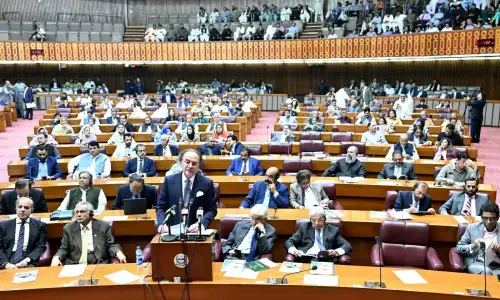
WASHINGTON: A showdown between the White House and Congress over the long-established isolation of Cuba looms large after the House of Representatives voted to overturn the law which has restricted US visits to to the island for the past 40 years.
The bill also called for the restrictions on selling food and medicines to Fidel Castro’s regime to be lifted, and the $1,200 annual limit on the money that Cuban Americans can send to their relatives there to be removed.
“This is all about freedom,” Jeff Flake, the bill’s Republican sponsor, said in a statement after Tuesday’s vote.
“Our government shouldn’t tell us where to travel and where not to travel. By allowing US citizens to travel to Cuba, Castro loses control over the ideas and information Cubans are exposed to.”
The majority in favour of abandoning the travel ban — 262 votes to 167 — demonstrates the crossparty support for overhauling a policy that has failed to oust Castro, now in his 43rd year of power.
Republicans representing Midwest farmers see a potential new market in Cuba and that is bringing them into sympathy with the majority of Democrats, who have long opposed the US position.
But President George Bush has made it clear that he will veto the bill if Congressional leaders send it to him. “Lifting the sanctions now would provide a helping hand to a desperate and repressive regime,” the White House said.
Two weeks ago, in an unusual joint letter to Congress, Colin Powell, the secretary of state, and Paul O’Neill, the treasury secretary, reiterated the White House view that Castro had shown “implacable hostility to the United States”, adding: “The Cuban government has refused to cooperate with the global coalition’s efforts to combat terrorism, refusing to provide information about Al Qaeda.”
The State Department reinforced the position in a letter to a congressman this week saying the government believed Cuba had “at least a limited, developmental offensive biological warfare research and development effort”, posing a “potential threat” to America.
Many of those who favour an overhaul of relations between Washington and Havana argue that electoral politics in Florida, where the president’s brother, Jeb Bush, is governor and the votes of anti-Castro Cuban Americans are crucial, is at least as important a motive to the White House.
Tuesday’s vote was Congress’s third attempt in as many years to scrap the travel restrictions, which include an $8,000 fine for failing to get treasury department permission to go to Cuba.
“Americans can travel to North Korea and Iran, two thirds of the ‘axis of evil’, but not to Cuba,” the Democrat congressman William Delahunt said. “That makes no sense, I would suggest.”
But Dennis Hays, of the Cuban American National Foundation, said that only Cuba’s adoption of free-market democracy would justify a change of policy.
A more extreme amendment, to end the US economic embargo of Cuba, was only narrowly defeated, by 226 votes to 204.—Dawn/The Guardian News Service.