0
0

KARACHI, July 17 The government has shifted focus to small fishing boats along with the regular ones, as the provincial authorities find it hard to persuade major stakeholders to modify their conventional system, a core demand of the European Union to resume banned seafood exports from Pakistan.
A senior official said the recent focus of the provincial government had returned results and small fishermen had responded positively, as more than 60 boats were likely to be modified in the next few weeks. However, the government efforts remain short of the EU demand, which wants as many as 200 regular fishing boats modified before it resumes exports from Pakistan.
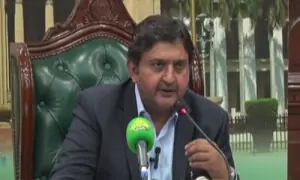
“We are providing nearly 75 per cent subsidy to boat-owners on each modification,” said Meer Muhammad Padhiyaar, Sindh fisheries secretary. “We are trying to convince the boat-owners that it is for their own benefit, and our efforts would ultimately attract the EU to resume exports from the country.”
The European Union in 2007 delisted on quality grounds all the 11 local seafood processing units, exporting consignments to its member states. Apart from the upgrade of the processing units, the European Union has also asked for the modification of 200 conventional boats in line with the modern fishing system.
The government, which launched a Rs220 million boats modification programme in 2007-08, has so far built fewer than 100 regular boats. Boat-owners argue that a large number of fishermen cannot even pay 25 per cent of the total cost of boat modifications.
“It costs from Rs500,000 to Rs1.5 million,” said Arsala Khan Niazi, chairman of the Boat-Owners Association. “There are a large number of people who can't pay such amounts and get their boats modified.”
He also questioned the boat modification programme, claiming that there was no proper check on the boats being modified by the short-listed boat builders by the authorities.
A senior official at the Karachi Fisheries Harbour Authority (KFHA) said that under the European Union demand boats were being modified on modern lines and claimed that there was a proper system in place to check such modification.
“Imported mat is used for fish holds with fibreglass,” he said. “Similarly there is a separate specification each for boat's base, sides, roof and working area, where fishermen move frequently.”
The European Union stresses construction of two new compartments in the new accommodation space with a door, window and coated fibreglass.
“The European Union specification says the winch area should have a boundary wall not less than eight inches in height with lining of fibre material to protect oil and grease,” added the KFHA official.
The government sees boat modification vital for resuming exports to European Union member countries, which shared a major chunk of the total seafood shipments from Pakistan around the world before the ban was imposed in 2007. Though the seafood exports registered a 14.20 per cent jump during the first 11 months (July-May) of the last fiscal year to reach $219.056 million, the authorities as well as the exporters believe that the shipments to the European Union would give a major boost to the industry and return to local fishermen.
“We are very much convinced that the desired results would be achieved in a month or two,” said the Sindh fisheries secretary. “We have managed to convince the boat owners to a large extent about our programme and the modification of 200 boats is not a big deal now.”