0
0

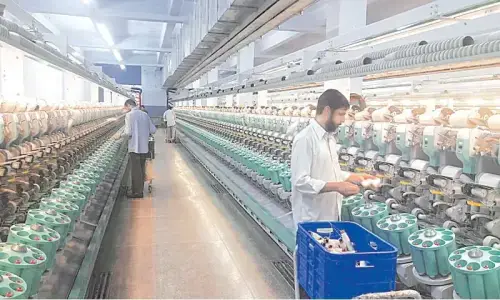
KARACHI, Nov 2: The textile sector that earns 60 per cent of total exports may see a shortfall of $700 million in foreign exchange earning during this fiscal year as a result of post-September 11 situation.
Commerce Minister Razak Dawood had initially quantified the potential loss in exports at $1.4 billion. The textile sector accounts for nearly 60 per cent of the country’s exports. In fiscal 2000-01 the share of the textile sector was $5.2 billion in the total exports of $9.2 billion.
Sources close to All Pakistan Textile Mills Association say Aptma is preparing a comprehensive paper for ministries of commerce and finance that would give details of how the textile sector has been affected. The sources say the Association has initially estimated a minimum loss of $700 million in foreign exchange earning in 2001-02.
“We are preparing the paper but I would not say how much loss we anticipate in textile exports,” said Aptma vice-chairman Mushtaq A. Vohra when reached by Dawn over telephone. He said the textile sector faced double challenge: the continuing fall of the dollar amidst declining export orders after September 11 is due to hit the textile exports.
“Besides the ongoing global recession may reduce further the foreign exchange earning through value addition.”
Textile millers say foreign exchange earning through value- addition fell sharply in fiscal 2000-01 because of the current global recession that was in the making last year.
The recession depressed cotton prices world over bringing it down from 55 cents a pound about a year ago to 42 cents a pound towards the end of the last fiscal year in June.
Sources close to Aptma say that additional foreign exchange earning over cotton fell from $1.22 per kg of yarn in 1999-00 to $0.95 in 2000-01; from $3.75 to $2.94 per kg of cloth; from $5.45 to $4.68 per kg in garments; from $2.95 to $2.58 in towels and from $4.48 to $3.95 in bedwear. Many textile millers fear further erosion in per unit earning through value-addition as the price of the cotton is still falling in the world markets.
What compounds the problems of the textile millers is the continuing fall of the dollar in inter-bank market.
Since September 11 the dollar has depreciated by more than 5 per cent making it difficult for the exporters to remain competitive. “The dramatic decline in the dollar value is going to hurt our competitiveness. The State Bank must ensure that the rupee-dollar parity remains at a sustainable level,” said Mushtaq A. Vohra.
Meanwhile, foreign buyers still continue to cancel and withhold orders. Aptma has so far not come out with figures about how much worth of orders have been cancelled or withheld. But many textile millers say such instances are piling up everyday.
Vohra said most of foreigners were cancelling buying orders or withholding them because “they think that we cannot deliver the orders on time as we are in the war zone now.”
“Little do they realize that our manufacturing facilities are thousands of kilometres away from Kabul and Qandhar and there is no emergency in Pakistan.”