0
0
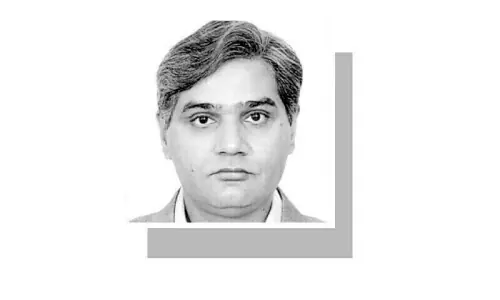
HYDERABAD, March 19 Noted historian and Director of National Institute of Historical Cultural Research, Dr Khurram Qadir, has said that research work of Pakistani scholars has failed to respond to the challenges posed by the scholars of western countries and counter them.
He was delivering a talk on “Post-partition trends in the study of history and Pakistani culture” organized by Pakistan Study Centre, University of Sindh, on Thursday. Scholars of different fields, including history, archaeology and education, were present on the occasion.
Dr Khurram said that local scholars had not contributed enough on the post-partition history whereas people outside Pakistan had produced lots of books and were interested in what was happening in Pakistan. He said that although many local scholars had contributed good work on the history but their work was not related to grassroots realities therefore it had not become popular among the readers.
He said that now the trend had changed and scholars were contributing to the writing of history and added that they needed to work more on history.
He said that apart from history books in different languages more than 10,000 articles and 20 journals were credited to the history research scholars of Pakistan.
However, he said that foreign scholars complained that Pakistani scholars` research had no depth because it was less theoretical and more hypothetical.
He said that the scholars from abroad, who had worked on the history of the subcontinent, were more specific about their subject. He said that foreign scholars had worked a lot on archaeology and civilisation of (areas now in) Pakistan.
He said that foreigners had not contributed to popular issues related to society and they had fond out only flaws and weaknesses.
He said that culture and civilisation were different areas as culture was related to lifestyle and civilisation to urbanisation over a long period of time.
He said that social change in the society was slow and added that nations could not survive without study of their history.
Speaking on the occasion, University of Sindh Vice Chancellor Mazharul Haq Siddiqui said that it was necessary to be mindful that the society was based on justice and pursuit of knowledge.
Pakistan Study Centre Director Dr Khalida Jamali welcomed the guest and presented report on research and academic activities at the centre.