0
0

WASHINGTON, Oct 31: The Bush administration wants Congress to write legislation allowing a freer flow of Pakistani textile products into the United States, US Trade Representative Robert Zoellick said on Tuesday.
The move is part of a broader administration effort to reward Pakistan for cooperating with US efforts to topple Afghanistan’s ruling Taliban and apprehend Osama bin Laden.
But at the same time, the administration is mindful of the difficult economic times the US textile industry has hit upon in recent months and the impact a flood of Pakistani imports would have domestically.
Zoellick, in a speech to the Council on Foreign Relations, said the Bush administration’s goal is “to try to reduce tariffs and to try to support Pakistan’s overall economic growth programme.”
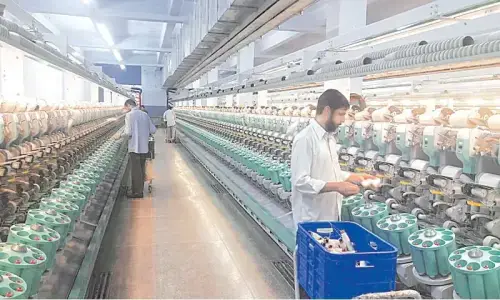
About 85 per cent of Pakistan exports are textile products. The United States imports about $2 billion worth annually.
Earlier this month, the American Textile Manufacturers Association, which represents the US industry, indicated it would support a limited loosening of restrictions on Pakistan’s textile exports.
For example, an ATMI official said the organization would support duty-free entry for hand-knotted and hand-hooked floor coverings from Pakistan, a move that would be worth about $100 million a year to Pakistan.
But the US industry was resisting broader exceptions to the limits on Pakistan’s textile shipments.
Zoellick said one of the points he made to the Pakistanis is that the US textile industry has lost about 600,000 jobs and been forced to close 200 to 300 plants.
While a new generation of US textile manufacturers say they are willing to go along with increased access for Pakistan and other suppliers, they want to see other countries lower their trade barriers as well, he said.
“If you look at the textile barriers in Pakistan, they’re much, much higher than they are in the United States,” Zoellick said. “Frankly, if we’re going to move forward on this, I hope it can be at least to a degree reciprocal.”
There’s a precedent for that in the recent European Union textile package for Pakistan, which prompted Islamabad to make some cuts in exchange, he said.
However, Zoellick said the larger point was that if the United States wants to help developing countries survive, “they’ve got to have jobs, they’ve got to produce, they’ve got to be part of the international economy.”
“I think this will be part of something the administration proposes to Congress and then, as in many areas, Congress will dispose,” he said. —Reuters