0
0

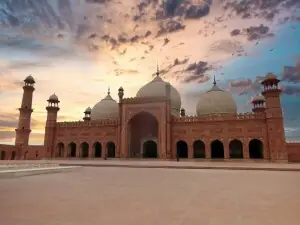
NAMES of people, places and areas carry great evocative power and meaning. When people give names to their children they take great care that an appropriate name is chosen. Names also create a personality for themselves. For example, I once heard someone explain to a stranger in Lahore that the name `Lahore` was Punjabi for `bring more,` and as such it explained the relative prosperity of the city as compared to the rest of the country. Lahore might be named after Loh, the son of Rama, but for this person it was the land of plenty and its name exhibited the same.
In the last century as countries gained independence from colonial rule, names gained currency as emblems of nationalistic pride. Hence, Rhodesia became Zimbabwe, Bombay became Mumbai, and Burma became Myanmar. Pakistan too went through a phase where names, especially street names, were changed overnight to show the change of hands and nationalist sentiments.
The politics of renaming engulfed Pakistan in different phases. Some place and street names, which were established by the British, were changed in the first decade after independence. After that nothing much happened for a long time, till the government of Zulifkar Ali Bhutto when there was a lot of urban reordering. Gone was the statue of Empress Victoria which adorned Charing Cross in the centre of Lahore, and even the jewel of the canal colonies, Lyallpur, was renamed Faisalabad in a bid to please the Saudis. Bhutto also pulled Pakistan out of the Commonwealth — a mistake which his daughter rectified 16 years later.
Dictator Gen Ziaul Haq also embarked upon name changing and in his free moments was quite glad to see that street names in Lahore and Karachi now sounded a lot more Arab (and at times unintelligible to the common man).
The case for these name changes was simple the old rulers had left and so the new ones had to change the names of places and streets to flaunt the new rulers. As most decolonised countries were in the Third World, they had little to show in terms of economic and social development in their first few decades of self-government to demonstrate that their independence was worthwhile. Hence, the change of names exhibited, in some ways, a `development` of sorts — at least in nomenclature.
The more sinister reason for the change of names was (and is) the goal of rewriting history. By changing names, some governments deliberately try to obliterate chapters from their past. Therefore, in a generation or so, residents of Lahore might hardly know that the vast green expanse in the middle of the city resembling Kew Gardens was established in the memory of John Lawrence, the architect of modern Punjab, and Jinnah, whose name it now bears, had nothing much to do with its establishment or upkeep.
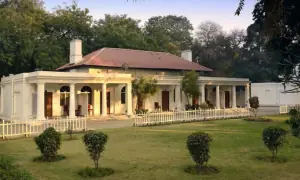
Similarly, if in the future Frere Hall is renamed in Karachi, few will remember in 50 years` time who Frere was, and why a hall was erected in his name. Hence through the renaming process, the work and person of many illustrious people who spent their whole lives toiling in the subcontinent is edged out.
For some unexplainable reason, though, Lahore seems to have bucked the trend of the large-scale acceptance of name changes. As compared to other cities in Pakistan, and even in India, where after about a decade or so the new name firmly settled in, in Lahore hardly any new name has stuck. So if one comes to Lahore and asks for `Faisal Chowk` nearly every resident will give a blank look. However, `Charing Cross` will get an immediate response.
Similarly, `Sharah bin Badees` might sound alien to most of Lahoris, but `Empress Road` will immediately get one directions. I am sure sociologists will have a better explanation for this phenomenon, but for a historian like me, this exemplifies that in some embryonic way the people of Lahore still want to retain some sense of history, and are rather proud of their mixed heritage.
This sense of accepting and even being proud of one`s chequered history is what is required in Pakistan. The people of Lahore, perhaps through their forgetfulness or through their sense of history, are correct in their rejection of new and unrelated name impositions. After all, there are enough new roads, parks, buildings and other public constructions which can be named after national figures. And if there are not enough, then we should create them!
I am sure that the national heroes will be more proud if their name is associated with a new project than as a rechristened name of an old one. I am certain that Sir Mohammad Iqbal would be happy to see a new medical college bearing his name, rather than King Edward Medical College being renamed Allama Iqbal Medical College (as was the proposal some 30 years ago, when a grant in reaction to the renaming project led to the founding of Allama Iqbal Medical College).
I began writing this article when Nawabshah was still Nawabshah and as such kept alive the memory of the person in whose name it was established. I was also going to applaud the current government for not renaming random things in memory of Benazir. But I was wrong. Nawabshah has now become Shaheed Benazir Bhutto district for no apparent reason. This is just a stunt for public consumption and even in that it has brought about the expected mixed results. Pakistan is an overpopulated country, and every day new housing projects, colonies and even small towns are being established. So why not create a new colony in the memory of Benazir Bhutto, say on the outskirts of Karachi, to alleviate its overpopulation problems?
The establishment of this new colony would not only be beneficial for people, it would also allow for better town planning and thus better facilities for its residents in the long term — something which Benzair Bhutto would have very much liked to do. Benazir Bhutto was a very vibrant, modern and forward-looking person and the petty political act of renaming a district with such a distinct history in her memory actually does disservice to her legacy.
Benazir Bhutto should have a lot more things named after her, but let us create and develop new and dynamic projects in her memory and not try to wash away the work of the past.
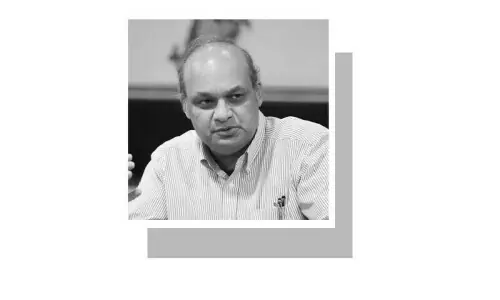
The writer is a historian at Keble College, University of Oxford.
yaqoob.bangash@keble.ox.ac.uk