FALLUJAH, Nov 8: US tanks and Marines stormed into Fallujah on Monday night in a fierce ground assault to retake the Iraqi city from militants.
Several tanks thrust into the city and guerillas were putting up some resistance, marine radio traffic showed.
Intense air strikes, artillery and mortar fire rained down on the city. The crackle of firefights was clearly audible as troops advanced at least four blocks into the militant stronghold, with helicopters flying overhead.
Flares lit up the night sky as the Marines earlier unleashed a barrage of tank and machinegun fire on a nearby railway station, clearing the way for the ground assault on the Sunni Muslim city.
"We are determined to clean Fallujah from the terrorists," Prime Minister Iyad Allawi said at a news conference in Baghdad, adding that the US-led operation, codenamed Operation Phantom Fury, had his authority.
Mr Allawi visited Iraqi troops at the main US base near Fallujah, 50kms west of Baghdad, a few hours before the main offensive began and told them they had to free the people of the city who had been "taken hostage by insurgents".
"Your job is to arrest the killers but if you kill them then let it be," he said.
"May they go to hell," shouted the soldiers. "To hell they will go," Mr Allawi replied.
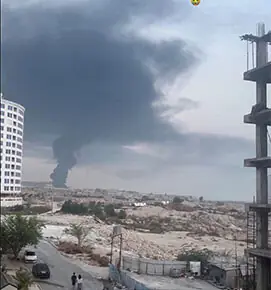
Intense fighting shook Fallujah in the morning. F-16 fighters screamed across cloudy skies, dropping bombs that sent up clouds of black smoke.
When air attacks eased, artillery shells rained down. Cobra helicopters fired rockets and gunfire crackled as US forces peered through binoculars at guerilla targets.
Between thunderous explosions, a religious leader with a booming voice at a distant mosque rallied militants for what could be Iraq's biggest battle since last year's occupation.
"God is greatest, oh martyrs," he said, telling fighters that waging holy war was an honour. "Rise up mujahideen."
A hospital doctor in Fallujah, Ahmed Ghanim, said 15 people had been killed and 20 wounded in the fighting.
Masked guerillas roamed empty streets in the city with assault rifles and rocket-propelled grenades.
Men wept as they buried seven white-shrouded bodies, some of them fighters, in a narrow trench in a makeshift graveyard at a sports stadium.
BAGHDAD AIRPORT CLOSED: Mr Allawi said he was using emergency powers to impose a curfew on Fallujah and its sister city of Ramadi further west from Monday evening and to close Baghdad international airport for 48 hours.
Mr Allawi also tightened controls on the borders with Jordan and Syria, saying only essential goods would be allowed in.
Mr Allawi declared 60 days of emergency rule on Sunday to crush The resistance before planned elections in January.
ZARQAWI: With the US offensive shaping up, Al Qaeda ally Abu Musab Al Zarqawi called on Muslims to take up arms against America. "Oh people, the war has begun and the call for jihad has been made," he said in an Internet statement.
Zarqawi's appeal did not mention Fallujah by name. The US military says fighters loyal to him are holed up in the city along with Iraqi fighters loyal to Saddam Hussein.
The Sunni Muslim Clerics Association urged Iraqi security forces not to fight with US troops in Fallujah and "to beware of making the grave mistake of invading Iraqi cities under the banner of forces who respect no religion or human rights".
Two suicide bombers detonated their vehicles to try to stop US forces advancing in Ramadi, police said. There was no word on casualties or US confirmation of the attacks.
Guerrillas also hit back in Baghdad, where a suicide bomber blew up his red Opel car near a US convoy on the main airport road, killing at least three people.
A photographer saw US soldiers taking three bodies from a white vehicle wrecked in the blast.
Guerillas killed a US soldier in eastern Baghdad in a separate attack, the military said.
A bomb blew up after dark at a church in the southwestern Dora area, witnesses said. Hospital staff said three people had been killed and 40 wounded in the bombing. -Reuters