0
0

BRUSSELS, March 12: Worried by the sudden deterioration in the European Union's economic relations with Pakistan, the European Commission is hoping to defuse a series of unusually acrimonious trade rows with Islamabad over the coming months.
"We really want to have a constructive relationship with Pakistan," EU Trade Commissioner Pascal Lamy told Dawn, adding: "We need to see how to improve relations."
Mr Lamy may just have to go to Islamabad to get the relationship back on track, although no dates for the visit have been set as yet.
Aides say the trade commissioner views Pakistan as an important trading partner, both on the bilateral front and in the context of the World Trade Organization.
Pakistan is often viewed as a "voice of reason" in the WTO, a country willing to listen to arguments rather than hide behind ideological positions.
The EU is also impressed by the South Asian Free Trade Area initiative launched by Pakistan, India and other countries in the region. But bilateral trade relations between the EU and Pakistan began to sour late last year over what officials in Brussels describe as an "unfortunate coming together of a series of unrelated EU measures."
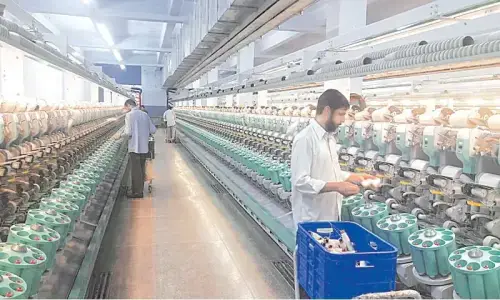
Islamabad and Pakistani businessmen have been most angered by the EU's decision last week to slap a 13.1-per cent anti-dumping duty on imports of Pakistani bedlinen.
EU officials say Pakistan's anger is unjustified. "We are obliged by our legislation to follow up industry complaints about unfair and injurious dumping," explained Lamy's spokeswoman Arancha Gonzalez.
The Commission succeeded in bringing industry demands for a 45-per cent duty on Pakistani bedlinen down to 13.1 per cent, Gonzalez said, adding: "Under the circumstances we behaved as moderately as we could."
Islamabad can ask for a review of the bedlinen case after the EU's May expansion to 25 countries, she underlined, saying: "This is not the end of the story." But EU trade officials, who had to cut short their dumping investigations last year after receiving death threats, must be given adequate security guarantees, she said.
Tempers in Islamabad have also flared over the EU's planned "graduation" of Pakistani clothing exports from the Generalized System of Preferences (GSP) as of January 1, 2005.
Once again, EU officials deny charges that there has been any special targeting of Pakistani clothing under the graduation provisions of the GSP scheme.
Special tariff privileges are automatically phased out for all products where trade statistics show that concessions are no longer required to boost sales. "This is a statistical exercise," said Gonzalez.
The Commission will, however, be reviewing its entire GSP scheme and is currently working on redesigning the system. If it wants to press for changes, Pakistan can participate in the debate, say officials.
"We are inviting Pakistan to contribute to thinking about the future of the GSP. We are open to arguments," Mr Lamy told Dawn.