0
0

KARACHI, May 25: Around 52 companies would hold meetings of their Board of Directors in the remaining three days of the current working week. Three-quarters of those companies belong to the cotton textile sector.
The main item on the agenda before the boards would be the approval and declaration of second quarter and six months results for the period ended March 31, 2004.
Textile companies that plan to hold board of directors (BoDs) meetings on one of the three days: Wednesday, Thursday and Friday include both the leaders and the laggards. Shahpur; Nishat (Chunian); Umer Fabrics; Mahmood; Idrees; Nakshbandi Industries; Data; Ruby; Saif; Kohat; Mubarak; Fazal Cloth; Samin are the textile mills that would hold the Board meetings on Wednesday.
Ravi; Crescent; Quetta; Shahtaj; Apollo; Fawad; Gadoon; Yusuf; Sunrays; Al-Qaim; Taj; Bhanero; Faisal Spinning; Blessed; Mian; Chaudhry; Yusuf; Sunrays; Indus Dyeing and Zaman Textile would hold the Board meeting on Thursday. Elahi Cotton; Bilal Fibres; Indus Polyester and Colony Textile have called the meeting of their boards on Friday.
In an earlier report on the Textile Industry, Faisal Shaji, analyst at Capital One Research said that despite the supply gap phenomenon of the cotton lint, Pakistani textile industry had performed exceptionably well and the total industry exports had surged to nearly $9 billion mark in just the nine months of the year 2003-04. The analyst forecast textile exports to touch $10 billion in the current fiscal year.
The analyst observed that the surge in textile exports was on the back of increase in industrial activity in the country that had been spurred by the private sector credit demand (Rs76 billion in the nine months to the textile sector).
"The rates of SBP's concessionary Export Finance Scheme (EFS) had dropped as low as 3 per cent, from 13 per cent that prevailed a couple of years ago", says the analyst. This, he said, had tremendously encouraged textile mills to raise money for working capital requirement.
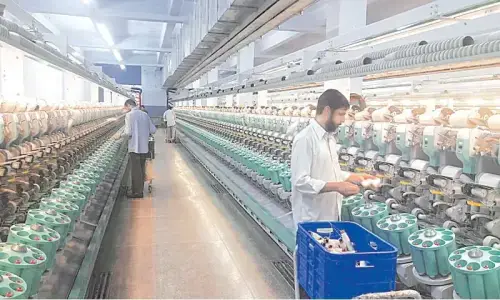
The composite textile mills had been on the forefront by modernizing their backward linkages, adding Chine ring frames to produce finer counts in spinning section with 100 per cent efficiency with low wage rates.
He observed that the trend had bode well for the textile mills to attain decent price margins in order to marginalize the operating costs of old Toyoda frames, thus augmenting their bottom line.
"Subsequently, companies had acquired airjet weaving looms, to prepare themselves for competition for better margins through further value addition and quality in the post-WTO era".