0
0

ISLAMABAD, Nov 14: The government unveiled on Friday the draft of its policy for reducing poverty during 2009-11 through economic liberalisation, deregulation and transparent privatisation.
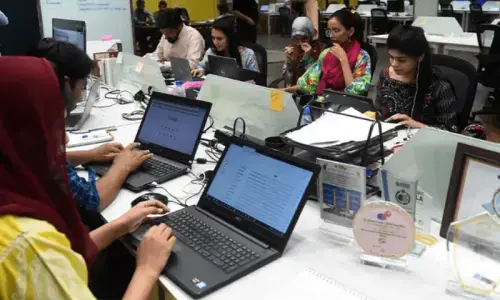
The draft Poverty Reduction Strategy Paper (PRSP)-II has come at a time when over half the country’s population is unemployed, close to one-fourth subsists in poverty and a little less than half is illiterate.
The draft was issued at a workshop attended by representatives of donors and the government. Two more workshops will be held before finalising the policy.
The vision of the paper is to regain macroeconomic stability, maintain a growth momentum of 7-8 per cent per annum, create employment opportunities and improve income distribution and the country’s global economic competitiveness.
It lays emphasis on agriculture and manufacturing sectors, alongside services.
Labour-intensive sectors, such as housing and construction and small and medium enterprises, will receive greater attention with the focus on skill development and higher education.
The proposed strategy comprises pursuing macroeconomic stability and real sector growth, protecting the poor and the vulnerable, increasing productivity and value addition in agriculture, an integrated energy development programme, making industry internationally competitive, human development for the 21st century, removing infrastructure bottlenecks through public-private partnerships, arranging finance for development, boosting the construction and housing industry and improving governance for a just and fair system.
The government will put in place a stringent system to monitor and evaluate the progress of implementation of the strategy.
Empowering women and reducing gender disparities are also among the goals of the strategy.
Minister of State for Finance and Revenue Hina Rabani Khar said efforts for social protection and governance would increase the capabilities of the poor by widening their access to key services and fostering social inclusion. This calls for allocating adequate resources for human development and improving public sector management and governance for building the capacity of institutions to ensure effective delivery of services.
She said social protection programmes would serve as an integrated framework for providing safety nets to the poorest and most vulnerable segments of society.
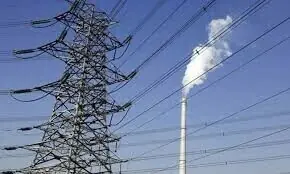
With a projected annual growth in energy demand of 7.2 per cent up to 2010 and 8.8 per cent thereafter, greater efforts would be needed for long-term energy security, she said.Ms Khar said large and medium dams were being built to tackle water shortage.
She said more than 80 per cent of the country’s estimated 50,000MW of economically viable hydropower potential was yet to be tapped. As part of the strategy to develop the resources, the government has announced that the construction of major dams would be completed by 2018. Total investment on Diamer-Basha, Munda, Akhori and Kurram Tangi dams between 2006 and 2018 will amount to $18.4 billion. The dams are estimated to produce over 5,500MW.
She said one million houses would be built for the poor, including five marla units for the homeless in rural areas. She said housing schemes for retired government employees and regularisation of slum areas had also been planned.
She said the Sindh government had set up the People’s Housing Cell to facilitate housing for low-income groups with a target of providing 100,000 units during the first year.
She said a committee had been formed to examine housing finance issues and suggest fiscal measures for affordable housing facilities.