0
0
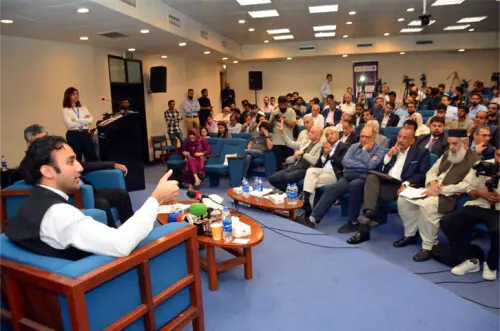
HYDERABAD, Oct 14: The vice-chancellor of the University of Sindh, Mazharul Haq Siddiqui, has said that the welfare of the people is dependent on scientific advancement and all nations whether small or big and poor or rich have great stakes in technological progress.
He was speaking at the inauguration of a three-day workshop on “Importance of Paleobotany in life sciences” organised by the Institute of Botany in collaboration with the Higher Education Commission (HEC) on Tuesday.
The vice-chancellor said that survival of the human race depended on plants, which were mainly responsible for sustenance and survival of all the living things on this planet.
He said that plants were a fundamental source of food, energy, shelter and clothing and above all oxygen. He said that plant diversity might itself reflect variation in the ecological setting and climatic conditions.
He said that the knowledge about plant diversity and their evolution was essential for tracing the history.
“We do not have time machines but these plant fossils act as time machine for us and provide information about the past,” Mr Siddiqui said.
Dr Syed Irtfaq Ali said that paleobotany helped in the identification of origin of plants and also the method to preserve them.
He said that paleobotony was introduced in the country by the University of Sindh. He said that Dr Khursheed Mustafa Khan, the first PhD in paleobotony in Pakistan, introduced the discipline of paleobotony in the Sindh University and another scholar from the Sindh University Dr A.A. Bhutta introduced paleobotony in the Punjab University.
He said that it was a very good omen that the University of Sindh had raised status of the botany department to an institute and hoped that scholars working here would serve to cater to the needs of society. He said that the teachers must encourage their students and involve them in research activities.
The pro-vice-chancellor of the University of Sindh, Dr Rafia Ahmed Shaikh, said that currently humans were facing multiple problems two of which were crucial ie climatic changes and food shortage.
Dr Shaikh said that study of paleobotany could provide us with clues as to how to preserve the environment by creating awareness about some of the possible problems that might upset the delicate balance that maintained life on this planet.
She said that paleobotany, a branch of paleontology, was the study of fossil remains of plants.
Dr Shaikh said that paleobotany studied the fossil records of plants and could inform us about various environmental and climatic changes occurred in the past and throughout the history of life itself.
She said that this could help us better understand and solve many environmental problems.
Prof Dr Ghulam Mustafa Seehar, Prof Dr Mohammad Tahir Rajput, Dr Basir Ahmed Shaikh, Dr Saleha Hasney and other scholars also spoke.