0
0

KARACHI, Oct 13: The State Bank of Pakistan on Monday further eased off its tight monetary stance by doubling the Limit of Time and Demand Liabilities (TDL) for Statutory Liquidity Requirement (SLR) to generate more liquidity in the banking system.
At present Pakistan Investment Bonds (PIBs) and Term Finance Certificates (TFCs) are eligible towards SLR to the extent of 5 per cent of TDL.
“It has been decided to increase this limit to 10 per cent with effect from October 18, 2008, and this additional increase of 5 per cent can only be met through investments in PIBs,” said the State Bank circular issued late night.
This increase is applicable on the investments in PIBs held in the bank’s own account only, it added.
In an another circular, the central bank announced that it had been decided to allow use of securities classified under Held to Maturity (HTM) category for borrowing under SBP repo facility (OMO) and discount window with immediate effect.
This facility would be against Market Treasury Bills (MTBs) and PIBs to the extent such investments were in excess of limit prescribed for SLR.
The SBP clarified that restriction on entering into repo transaction against HTM securities in inter-bank market would continue.
“This new arrangement is being made temporarily to provide liquidity comfort to banks and same will be reviewed in due course of time,” said the circular.
Last week the State Bank had slashed the Cash Reserve Requirement (CRR) to 7 per cent from 9 per cent in two steps to generate extra liquidity up to Rs61 billion.
The drying liquidity in the global banking system has threatened the financing system the world over including Pakistan. However, Pakistan Banks’ Association said on Saturday that Pakistan would receive mild impact of what was happening in the US and Europe.
The local banks have already taken cautious approach towards lending and the recent steps of the State Bank to generate liquidity suggested that the banking industry was feeling the pinch of global financial crisis.
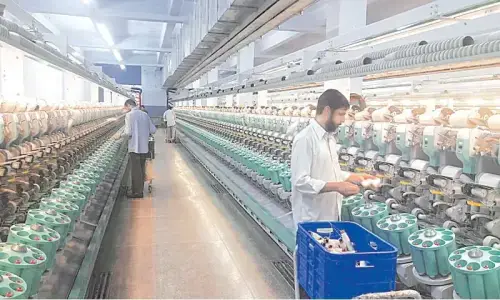
Abdul Rauf, a textile miller, said that textile sector had started receiving the impact of credit crunch as banks tightened lending to the textile industry, which is the biggest receiver of the credit from banks.
Mr Rauf said this was a peak season and the millers needed working capital to procure cotton and machines.
Ebrar Aleem, an analyst, said that the recent turmoil in the financing system would hit Pakistan on a later stage.
“The later stage may come in weeks and or it may take several months, but it will come as Pakistan is not an isolated country,” the analyst observed, adding that “Pakistan depends on US and Europe for most of its exports and both are in trouble”.