0
0

MULTAN, Aug 31: Prime Minister Yousuf Raza Gilani has said that the government was taking bold decisions to phase out subsidies in order to rehabilitate the economy.
Talking to journalists at the airport here on Sunday evening, he said the World Bank, International Monetary Fund and other donor agencies had suggested that Pakistan’s economy could not be strengthened if the policy of subsidies was not done away with.
He said since the government wanted to rehabilitate the economy, some tariffs like electricity and duties on some items needed to be increased.
The prime minister said that because of the subsidies, the Water and Power Development Authority (Wapda) was unable to pay its outstanding bills to Pakistan State Oil and other companies. He said these dues of Rs64 billion had been paid by the government so that loadshedding could be reduced. Mr Gilani said it had become necessary to pass on the burden of subsidies to consumers.
Answering a question, he said Pakistan was fighting the war on terror in its own interest because the government and the state were responsible for protecting the life and property of its citizens.
The prime minister said: “We are not fighting this war for Americans or for any other power, but for our own sake”.
He said the government was not against tribesmen or peaceful Taliban, but it had to establish peace. He made it clear that talks could not be held with the elements, who were killing innocent people, law-enforcement personnel and even armymen.
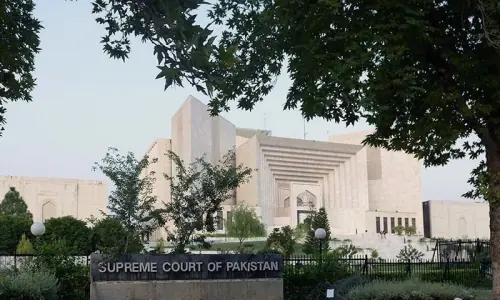
In reply to a question, the prime minister said that the judges would be reinstated through parliament at a proper time.
About talks with the PML-Q leadership, he said politics was a day-to-day affair. He said in the post-Musharraf scenario the situation had changed.
“We do not want an atmosphere of confrontation but of rapprochement with all political elements. We were not against any individual, but wanted to change the system. Now a positive change is taking place.”
Answering a question about investigations into Benazir Bhutto’s assassination, he said the National Assembly and Senate had passed resolutions in this regard and the government referred the matter to the United Nations.
About the possible outcome of the presidential election, the prime minister said since the Pakistan People’s Party and its allied parties enjoyed an overall majority in the electoral college, Asif Ali Zardari was likely to win.
About the schedule of presidential election, he said the Constitution required the election for the office of the president to be held within 30 days of the vacancy.—APP