0
0

ISLAMABAD, June 21: The Federal Board of Revenue (FBR) has entered into an agreement with the Pakistan Nuclear Regulatory Authority (PNRA) to combat trafficking of radioactive and nuclear materials.
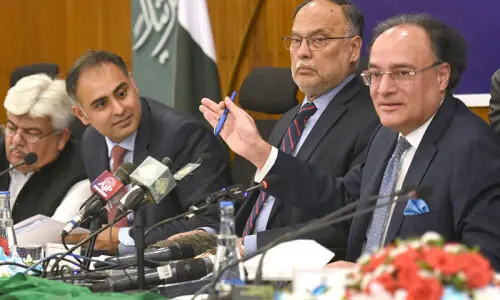
FBR’s member customs Mahmood Alam and PNRA executive member Shakil-ur-Rehman signed a memorandum of understanding on behalf of their respective departments.
The agreement is aimed at promoting cooperation against growing international threat of illicit trafficking of radioactive and nuclear materials which poses grave hazard to national and international security.
According to the MoU, Pakistan Customs is the primary enforcement agency at international entry and exit stations, including airports and dry ports. While the PNRA is the national statutory nuclear regulatory authority entrusted with the task to regulate all aspects of application of ionising radiations and nuclear energy in Pakistan.
The PNRA has already procured the necessary detection equipment, which would be handed over to Pakistan Customs after training of customs personnel.
This equipment will be used by the customs at seaports, dry ports, airports and at any other station along the international border or for goods in transit or in trans-shipment or the goods en route throughout Pakistan.
The PNRA will also provide technical assistance and maintenance facilities for radiation detection equipment and radiation protection, management of radioactive and contaminated consignments, while both will cooperate to manage radioactive sources and materials identified or seized and confiscated by the Pakistan Customs.
It has been agreed that Pakistan Customs in association with the PNRA will run a pilot project at the Islamabad International Airport for comprehensive enforcement model for customs controls. The model will be applied to all other international airports by the Pakistan Customs for effective enforcement controls after completion of the pilot project.
FBR chairman M. Abdullah Yusuf said the growing threat of terrorism had emerged as a major concern for customs administrations, which included potential threat of smuggling of nuclear and radioactive materials. The agreement is intended to provide the framework to ensure that their illicit trafficking is prevented.