0
0

KARACHI, June 10: The irresponsible macro-economic management in a period of political instability and challenging external factors moderated the pace of economic growth in the country from targeted 7.2 to 5.8 per cent. Most macro-economic indicators degenerated over the year under review, the Economic Survey 2007-08 revealed.
Inflation increased and internal and external deficits widened. The performance of commodity producing sectors, particularly agriculture, was dismal.
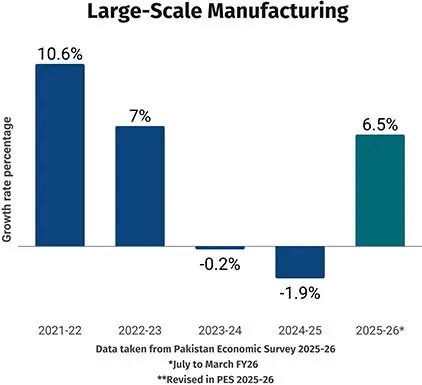
The manufacturing sector posted much less expansion than expected. This means that too much money was chasing fewer goods that were mostly imported.
Federal Minister Naveed Qamar, who is currently holding many portfolios, including finance, in his press conference, where the report was launched attributed the overshoot to a shortfall in revenue and massive overshoots in expenditure due to interest payments and fuel and food subsidies.
The situation of local resource mobilisation worsened as, those, with capability to pay, were either not taxed or opted to evade the levy that is meant to support a government that was perceived more to be a part of the problem than a solution to public woes of energy and commodity shortages.
The heavy dependence on direct borrowing from the State Bank to meet the expenditure demands in an election year by the Shaukat Aziz led PML(Q) government, non committal attitude towards economy by the interim government of Mohammad Mian Soomro and pre- occupation of PM Gilani-led coalition government with on- going political bickering left the economy rudderless.
The situation proved to be highly conducive for market manipulators who made fortunes by investing in essential commodities fetching high prices. The investor wary of political uncertainty opted to delay investment decisions resulting in contraction in the rate of investment.
The services made the major contribution in the growth rate achieved during the year ending this month.
Consumer spending was reported to be strong growing at a much higher rate than last year. In a country where propensity to save is already too low this is not much of an achievement.
If the trend is allowed to continue it would increase the dependence of investment rate on external flows adding to the vulnerability of the economy to factors beyond our control.