0
0

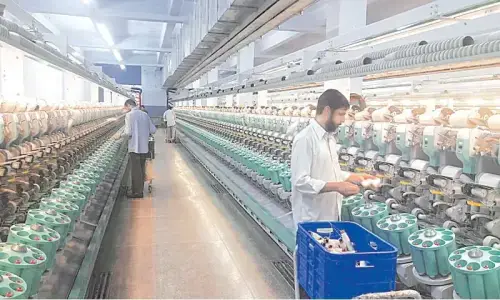
ISLAMABAD, June 3: Faced with a soaring budget deficit, the government on Tuesday constituted a high- level committee to review the economic implications of the proposed Rs30 billion cash subsidy package for the textile exporters, Dawn has learnt.
The package is designed to subsidise consumer prices of textile and clothing products for their sale in the markets of rich countries.
The government has already doled out more than Rs32 billion to the textile exporters during the last over two years under the head of six per cent research and development (R&D) subsidy, which is expected to reach Rs50 billion by end of the current year.
Sources told Dawn that the committee was constituted following the serious reservations from some ministers, who objected the continuation of cash subsidy for the next fiscal year saying the dolling out of subsidies did not help in increasing the exports from the sector.
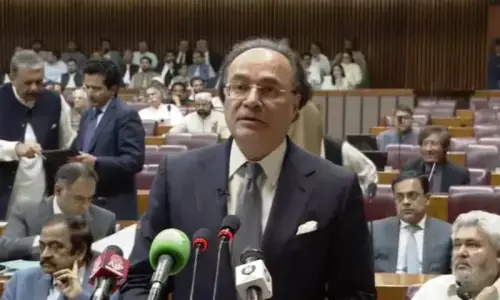
The package recommended by the ministry of textile was discussed at length at the Economic Coordination Committee (ECC) meeting headed by Prime Minister Yousuf Raza Gilani on Tuesday, which led to the formulation of the committee.
The committee includes representatives of textile, commerce, and Federal Board of Revenue and governor State Bank of Pakistan.
The sources said that after claiming huge cash subsidy, concessions on bank loan rates and also on export refinance in last few years, the pace of growth in textile exports did not accelerate, which remained stagnant at four per cent between April 2005 and Jan 31, 2008. However, the exports witnessed a negative growth since February last.
The sources said that the government was facing problem of financial accumulation to increase the share of provinces in the divisible pool in the next budget, while the textile exporters were demanding this hefty package at a time when government is desperate for arranging subsidy for curtailing the rising prices of essential food items.
Under the proposed package, the textile industry has proposed 3 per cent rebate on exports of garments worth above $25 million, 2.5 per cent for home textile, while it will go up to 9 per cent in case of exports worth $200 million.
The sources said that textile industry had just changed the concept from the 6 per cent R&D cash subsidy to the special duty drawback rates in a way to avoid criticism from people, who are raising concerns for diverting taxpayers’ money for financing the rich countries’ consumer purchasing power.
The sources said that not a single unit was added to the existing strength of textile mills, and instead a large amount of subsidies was allegedly diverted to set up industries in other sectors i.e. cement, sugar and power generation. Similarly, import of textile machinery is also on the decline for the last couple of years.
Analysts said the new government should revisit the policy of subsidies, which should be result-oriented and be linked with increase in export proceeds. It should also be linked with enhancement of competitiveness of products and introduction of new products.