0
0

RIYADH: Saudi Arabia, May 17: The world’s largest crude producer, has been under intense focus, once again this week. The issue of oil and the pressure on Riyadh to increase crude output has been intense as President George W. Bush met King Abdullah at his ranch in Janadriyah, some 40km northeast from here.
And this was understandable. The US president was eager to avoid spiralling oil prices in the months leading up to the November presidential election, scuttling in the process Republican candidate John McCain’s hopes to succeed Bush in the White House.
“I think that if there was a magic wand, and say, okay, drop price, I’d do that,” Bush said last month. “But there is no magic wand to wave right now.”
Indeed there is no magic wand to resolve this issue. Most now agree high oil prices could be counter-productive, even from the producers’ viewpoint. It could push the global economy further into recession, reducing the demand for oil. High oil prices could also spur movement in the alternative fuel sector.
Oil producers indeed want oil demand to stay firm in the coming years too, for their own reasons indeed.
The Saudi oil minister told the friends from Washington that his country was doing whatever it could. It raised the output by 300,000 bpd earlier this month, and would be ready to increase it, only if and when required. And this remains a big ‘if’.
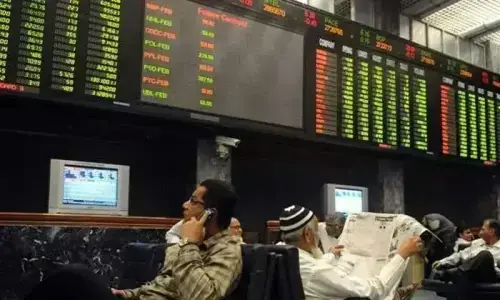
However, does Opec really have the power to influence the oil market? Just a day prior to Mr Bush’s arrival in Riyadh, the Saudi oil minister while addressing a conference in Seoul Korea underlined, “the short-term oil price gyrations seen in recent years are more closely tied to the internal logic of the financial markets than to underlying supply/demand fundamentals,” he said.
Reiterating that financial markets, rather than fundamentals, were influencing current oil prices, he added: “Financial markets have a logic and mechanism of their own. Such markets are influenced by ever-changing factors and parameters that transcend markets and boundaries and are often unregulated.
Therefore, the short-term oil prices are more closely tied to the internal logic of the financial markets than to underlying supply and demand fundamentals.”