0
0

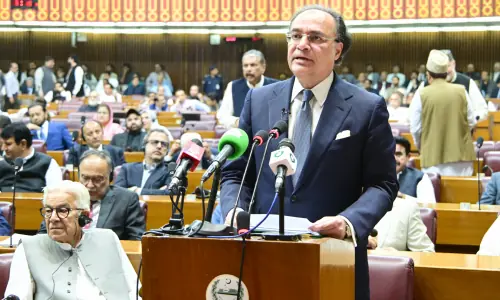
KARACHI, Feb 29: Federal Minister for Commerce and Textile Industry Shahzada Alam Monnoo said here on Friday that solution to all problems, including that of short cotton crop, viability of industry and competitiveness in the world market, lies in value-addition of textile products.
Speaking at a dinner hosted by the Pakistan Readymade Garment Manufacturers and Exporters Association, he said: “Any amount of government support can work only for a short period, but ultimately the industry will have to face ground realities and work on its own for a sustainable growth.”
The minister said there was a gap of around four million bales between demand and supply and the country had to import cotton from Central Asian states and India to meet this gap.
He said that crop size could not be ensured because nature plays its role.
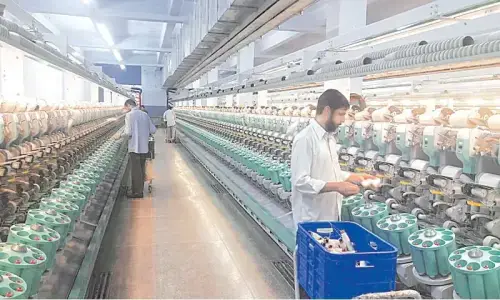
“What is needed is that instead of expanding spinning and weaving industry, the business community should concentrate on value-addition which is the only way out for the textile industry,” said Mr Monnoo.
Referring to some of his meetings with leading textile tycoons when he took over, he said he had asked them if the government gave them higher research and development support, “will they be able to assure him that all their future problems will be resolved,” but none could gave him an answer in the affirmative.
On the contrary, he said “today we are witnessing that the textile industry is in a deep crisis even after getting three to six per cent R/D support.”
Similarly, he said when textile tycoons demanded moratorium on bank loans and mark-up, they failed to assure that on getting this relief their problems would be over once for all.
The minister explained that for getting any approval, a summery or a proposal had to be made and all ministries’ approval had to be sought, and only then it could be presented before the Economic Coordination Committee (ECC) for a final approval. In his address of welcome, the chairman of PRGMEA, Bilal Mulla, pointed out that although the R&D support of three per cent on fabric export was admissible to 74 countries, but garment exporters were entitled to claim support at six per cent in respect of 32 countries.
The minister suggested that if there were differences among various segments of textile industry, they could be settled amicably after holding negotiations.