0
0

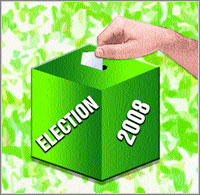 PESHAWAR, Feb 18: Nazims and councillors proved a major driving force to mobilise voters in most of the constituencies in the provincial metropolis, where people were initially reluctant to turn up at polling stations because of security reasons.
Visits to different polling stations both in urban and rural areas showed that members of local government were at the forefront of poll-day management although legally they couldn’t align with any political party.
The Election Commission of Pakistan (ECP) had barred the nazims from participating in the electioneering through a notification issued on Nov 20 last year.
Mainstream political parties like People’s Party Parliamentarians had been demanding suspension of local bodies fearing that they could influence the electoral process.
Amid reservations over the role of these elected representatives, nazims and councilors affiliated to various political parties took active part in electioneering, observers said.
The nazims and councilors had not only organised corner meetings and facilitated door-to-door campaigns, but they had also spent generously on gigantic billboards and multi-coloured posters with their pictures displayed at every nook and corner of the city.
Monday proved a field day for these supposedly ‘non-political’ public representatives, whose public interaction at grassroots level had benefited most of the candidates.
They were responsible for managing all the poll-day related affairs within their respective domains, as they were seen issuing instructions from transportation of voters to handling affairs with the polling staff on behalf of candidates.
One of the councilors at union council Khalisa-I, Peshawar, who was assigned by his party to oversee affairs at a polling station of NA-I, explained:
“I have 20-year long association with my party, so it is almost impossible for me to distance myself from electioneering and party’s candidates.”
Several union council nazims, who had resigned from their slots to contest general election, played active role in bringing the otherwise reluctant voters to the polling stations for their own and the benefits of other candidates from their respective parties.
The two-month long electioneering also caused political divide at local level, as in many places members of local government were seen supporting different parties.
For example, in a union council, if the nazim was supporting a political party, his niab nazim or councilors were trying to grab maximum support for the rival candidates.