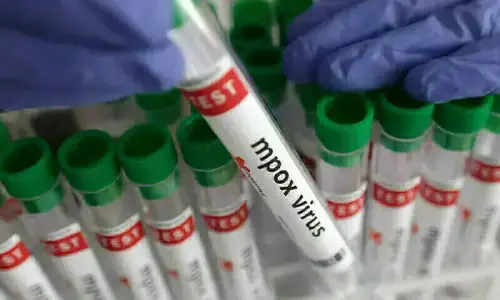
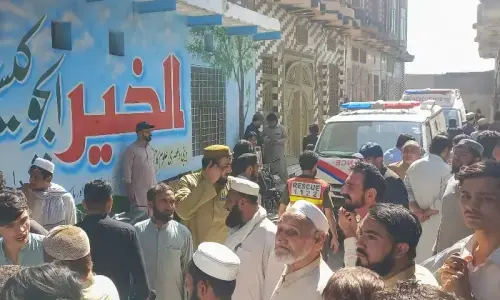
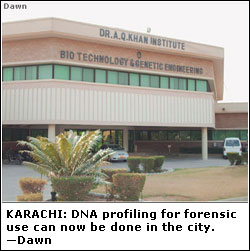
 KARACHI, Nov 2: The Dr A.Q. Khan Institute of Biotechnology and Genetic Engineering, Karachi, an affiliate of the Karachi University, has prepared the DNA profiles of the two suspected suicide bombers who are believed to have caused the midnight carnage at the Pakistan Peoples’ Party rally on Oct 18, killing at least 140 people and injuring about 400 others.
This is the first time this task has been officially commissioned in the city. Earlier, DNA profiles used to be prepared only at the Biomedical and Genetic Engineering Division of Khan Research Laboratories, Islamabad.
“Law-enforcement officials brought the severed heads of the men suspected to be the suicide bombers and we have done the DNA profiling as requested,” said Dr Syed Qasim Mehdi, the director-general of the institute. “Now, if the law-enforcement agencies bring any persons whom they suspect to be relatives of the dead men, we can make their DNA profiles and match them to determine whether or not they are related.”
‘Tracing the missing’
The institute is also formulating DNA profiles of the body parts collected from the blast site. The Edhi Foundation reports being in possession of 16 sacks of severed parts at the Edhi morgue and scientists at the Dr A.Q. Khan Institute have collected tissues from each part in order to prepare DNA profiles. This will establish whether the over 70 persons missing since Oct 18 were present at the blast site and point towards their deaths. A family member searching for a missing relative can have his or her DNA profile matched with the stored profiles of the body parts, explained Dr Mehdi.
It costs between Rs1,500 to Rs2,000 to profile each DNA sample and the sum multiplies with procedures to match profiles. However, the institute is offering these services free of charge in the Oct 18 context because the attack was a national tragedy, Dr Mehdi told Dawn.
By contrast, a private sector medical university charges Rs8,000 for the tissue-matching tests normally required for organ transplantation cases.
Asked whether his institute could maintain a data bank of DNA profiles on the national level, the Dr Mehdi said that “we could maintain a NADRA-style database but such projects cannot be carried out without the assistance of the government.”
The Dr A.Q. Khan Institute of Biotechnology and Genetic Engineering operated under a trust for the first four years and became affiliated with the Karachi University in Dec 2006. It currently offers postgraduate research degrees to 15 PhD students working under the supervision of three professors and three assistant professors.