0
0

 ISLAMABAD, Aug 27: A senior vice president of the ruling Pakistan Muslim League (PML-Q), Akram Zaki on Monday criticised the government for what he called the policy of killing its own people and stressed that this “madness” must come to an end.
Speaking at a seminar on, “Pakistan-Afghan grand jirga and regional peace,” organised by the Sustainable Policy Development Institute (SDPI) here, he said it was a folly to pitch the army and the people of the tribal areas against one other.
He noted that the situation was grave and warned that the danger was likely to spread. “The killing of our people on both the sides (of the Pakistan-Afghan border) is a great tragedy,” he remarked.
He opined that use of force was no answer to Talibanisation and called for devising a new strategy, based on a combination of political and economic factors.
He also severely criticised the government for trying to conceal the facts about the US military operations inside Pakistan’s territory.
Mr Zaki termed the presence of Nato forces in Afghanistan contrary to international law. He accused the Americans of making a big mistake by giving the real power in Afghanistan to the Tajiks, who were less than 15 per cent of the population.
He underlined the need for giving Pashtoons their due share in political dispensation and stressed that it would help check the spread of Talibanisation.
He said the nationalists fighting for their rights should be distinguished from terrorists who want to achieve their objectives by frightening others.
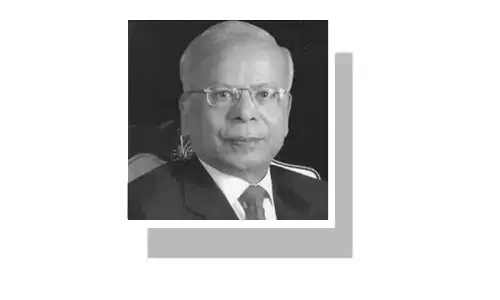
Ambassador Zahid Saeed, President Retired Ambassadors’ Association and former director-general (Afghanistan), ministry of foreign affairs said all parties to the conflict in Afghanistan should reach a comprehensive political settlement based on genuine Afghan reconciliation, power sharing and a time- frame for withdrawal of foreign troops.
He said efforts of the peace jirga could be valuable in this regard, provided it played a mediatory role between the parties.
He said all the parties should comply with the provisions of the Geneva Conventions to observe humanitarian standards in the conduct of the conflict, including proper treatment of prisoners of war, prohibition of collective punishment and immunity of civilians from becoming a target, whether in action by insurgents or through the so-called collateral damage inflicted by Nato or US forces.
He said an agreement on sustained economic support of the region, including Afghanistan and the tribal areas of Pakistan, should be signed after the withdrawal of foreign troops from Afghanistan.
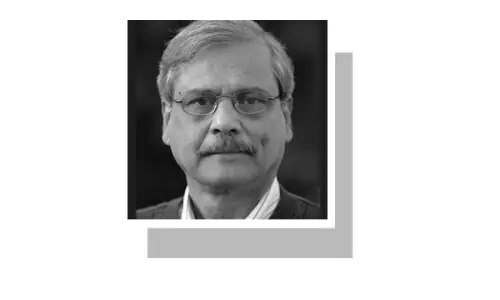
Dr Azmat Hayat Khan, Director Area Study Centre, Peshawar said that there were both negative and positives aspects of the recently-held jirga in Afghanistan.
He said the presence of American forces in the jirga was the biggest negative aspect, which poses a serious threat to the whole process.
However, some positive aspects such as development of an understanding between Pakistanis and Afghans, recognition of the de facto trade between the two countries, emergence of new thinking among Pashtoon and non-Pashtoons to save Afghanistan from disintegration.
He said another positive of the jirga was the recognition among Afghans that they cannot ignore Pakistan in the process of their recovery from sufferings of last 30 years.
He ruled out that Afghan fight was a religious phenomenon adding that like Al-Qaeeda, Taliban or Talibanization were western terminologies. He claimed that Afghans prefer Pakistan over Iran due to several reasons.
Afzal Khamosh, Chief of Pakistan Mazdoor Kisan Party (PMKP) who attended and spoke at the peace jirga, urged Pakistan and Afghanistan to end their cooperation with foreign occupiers to save their people and resources from the deep-rooted exploitation of superpowers.
He said presence of foreign troops in Afghanistan was a crucial aspect and it was not a fight of religion or nations but a fight for safeguarding imperial interests, which have complicated the crisis, leaving millions of Afghans, and the people living across the border inside Pakistan deprived of their fundamental rights and basic services.
He said the jirga in Kabul provided an excellent opportunity to the 700 delegates of both sides to have an informal dialogue on common issues, adding that a majority of them developed a common understanding even before the jirga that it was neither Pakistan nor Afghanistan but someone else behind this worsening crisis.