0
0

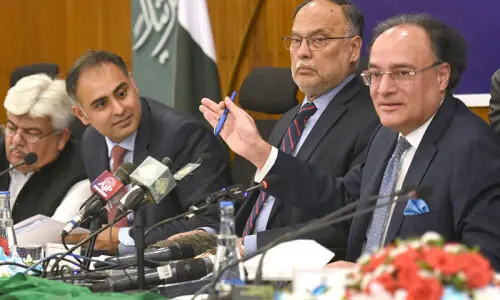
NEW DELHI, July 4: India and Pakistan displayed a new shared urgency on Wednesday to combat terrorism in their respective backyards and, in an unusual unity of purpose, prescribed swift and effective punishment for its perpetrators.A joint statement issued after Tuesday’s talks led by Pakistan’s Interior Secretary Syed Kamal Shah and Indian Home Secretary Madhukar Gupta here spoke of candid discussions “in a constructive and friendly atmosphere”, a rare description for this particular segment of the ongoing composite dialogue.
Traditionally, home ministries of the two countries are known to disrupt rather than encourage peace dialogues. But going by the enthusiastic and even positive comments from both sides, there is clearly a change in the offing.Sources close to the talks said Wednesday’s joint statement was intended to reflect this new understanding even better, but some of the details of the tentative agreements between the two sides would now be fleshed out later as Mr Shah had to return home early to attend to the Lal Masjid standoff in Islamabad.
There is a distinct possibility that the opportunity would come sooner rather than later.
One such window is the Saarc home ministers’ meeting in Delhi later this year, when the home secretaries could move to a quiet corner for a bilateral chat. They would possibly issue a fuller joint statement then.
What the present joint statement does not spell out yet is the fact that an agreement has been virtually reached to allow old and very young citizens — 65 plus and 12 years or below — visas on arrival.
There was some discussion about liberalizing the visa regime for journalists, but it was felt by some of the interlocutors that it would “over-egging the pudding” for now.
For the time being journalists would be covered for proposed easier visas under the category of “civil society”, a broad enough definition that should go down well with grudging bureaucrats on both sides.
After the talks Pakistan also seemed hopeful of getting Chennai instead of Amritsar as currently agreed as a third point of entry for air traffic between the two countries. So it would be Lahore, Karachi, Islamabad for India and Delhi, Mumbai and Chennai for Pakistan as and when they choose to open direct traffic to third destinations.
The official statement after the fourth round of home/interior secretary-level talks on terrorism and drugs trafficking indicated a few more issues that made progress.
They also agreed to release by August 14-15, 2007, those prisoners who have been granted consular access, whose national status has been verified and who have completed their prison sentences.
To this end, they agreed that immediate steps will be taken by either side to reconcile their numbers to facilitate their early release on completion of necessary formalities.
The two sides also agreed to release by August 14-15, 2007 the remaining fishermen in each other's custody on completion of due process. They further decided to take immediate steps to release the fishing boats, excluding trawlers, in each other's custody.
Both sides agreed that the recently formed Committee on Prisoners is a useful instrument to facilitate release and repatriation of prisoners who have served their prison sentences.
It was agreed that action would be initiated to hold two meetings, one in India and the other in Pakistan, within a period of 3 months by which time the necessary reconciliation of numbers of prisoners on both sides would have been completed.
Separate working groups discussed in detail the drafts of the revised Visa and Consular Access Agreements aimed at liberalizing and making existing provisions more effective. The text of the Agreement on Consular Access has been finalized. Also, they made considerable progress towards early finalization and signing of the Visa Agreement.
Both sides assessed as positive the existing cooperation and information sharing between the Narcotics Control Bureau of India and the Anti Narcotics Force of Pakistan and agreed that both Agencies would enhance mutual cooperation in terms of effective and sustained steps to control drugs trafficking.
Both sides appreciated the continuing interaction between the Central Bureau of Investigation of India and the Federal Investigation Agency of Pakistan in the areas of human trafficking, illegal immigration and counterfeit currency, and underlined the need to further intensify it.