0
0

BAGHDAD, May 5: The UN-brokered economic compact signed this week with great fanfare aims to create a liberal free market in Iraq, but US officials admit that for now this approach will take a back seat to more statist job creation schemes.
The deal was approved on Wednesday at a conference in the Egyptian resort of Sharm el-Sheikh by the leaders of more than 50 countries, who agreed to fund reconstruction if Iraq meets certain economic benchmarks.
The agreement urged Iraqis to set up what the US State Department’s pointman on Iraq, David Satterfield, described last month as “the basis for a liberal, investment-friendly, investor-friendly economic regime.”
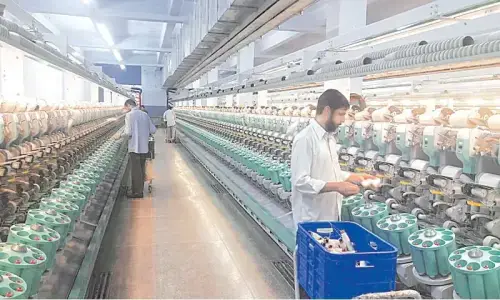
But, while the language echoes Washington’s dreams for transforming Iraq before the March 2003 invasion, officials on the ground admit that, in the short term, reviving state-owned industries to create jobs will take priority.“At this stage in Iraq’s situation, I would argue very strongly that profitability is not the key aspect in assessing your state-owned enterprises,” a senior US official in Baghdad involved in economic policy said this week.
“Employment in this situation is frankly more important in many ways than profitability,” he told reporters.
Observers estimate that around 48 per cent of Iraq’s workforce is unemployed, creating an army of the dispossessed which is a fertile recruiting ground for the many illegal militias and insurgent gangs fighting in the war.
In March, Paul Brinkley, the US Department of Defence's undersecretary for business announced a plan to reopen dozens of Iraq’s old state-owned businesses and initially re-employ 10,000 workers.
“There is a recognition that security and economic prosperity go hand in hand, and that unemployment in Iraq is contributing to the frustrations of people and creating sympathy for insurgents,” Brinkley said, at the time.
“The factories served as the engine for the Iraqi economy and must be restarted.”
The new US position, contrasts heavily with the neo-conservative influenced policy of early days of the occupation.
In the aftermath of the 2003 invasion, the subsidies and tariffs protecting local industries were lifted, forcing the state-owned industries to close and tossing nearly 100,000 people out of work.
Coming hard on the heels of policies disbanding the army and firing Baath party members from their jobs, the result was a huge number of disgruntled, unemployed men that went on to swell the ranks of the insurgency.
“There was a lot of foolishness in 2003 and they failed to recognise the realities and be sufficiently practical in dealing with the situation,” said the US official.
“The policy balance that is required in this period is rather more sophisticated than what you saw in the enthusiasms of the Coalition Provisional Authority in 2003,” he added.
One of the biggest signs of a policy shift was the return of top US diplomat Tim Carney to Baghdad in January to oversee the reconstruction effort.
Carney spent two months in Iraq right after the invasion trying to restore the industrial sector and then resigned in disgust when it became clear they were just being left to close down or be sold off.
There are still hopes that Iraq will be able to sell off industries to private sector and foreign investors -- much to the chagrin of many Iraqis who fear their national patrimony will disappear in a fire sale.—AFP