0
0

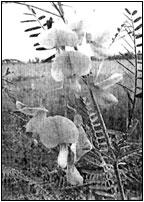 SESBANIA grandiflora, locally known as Manjhandri, is a leguminous shrub grown in Sindh mainly as a source of timber through old times. Boles of these plants are used in construction of kutcha houses, cottages, huts, landhis or animal sheds and shelters. The soil and climatic condition of Sindh is suitable for the cultivation of this economic value plant. But, till date this crop has not made its place in the cropping systems.
Sesbania grandiflora or Manjhandri, also known as Manjhely or Shevri, is grown as livestock fodder and for improving fertility of the soil. The perennial species of Sesbania establish easily, grow on difficult sites and need cheap management to maintain productivity. The species have many attributes that make them attractive as multipurpose plants and potentially useful species for agricultural production. Annual or perennial grown Sesbania species are many, identified by their different names such as Sesbania sesban, Sesbania aculeata, Sesbania aegyptica, Agati grandiflora and Sesbania grandiflora etc. There are two types of Sesbania grown in Sindh, one species is albiflora (white sesbania) and second is coccinea (red sesbania). This crop may be grown in Sindh successfully in spring (February and March) and monsoon (July and August). The marginal lands of rice and sugarcane tracts are best suited for cultivation of this shrub. This plant could serve many purposes in these areas such as reclaiming of soil, fixing nitrogen in root nodules as fertiliser and as green manure.
BOTANICAL DESCRIPTION: Sesbania species are quick, short-lived, soft wooded plants which are 8metre tall, sparsely branched, bole straight and cylindrical, the wood is white and soft. Bark light grey, corky, deeply furrowed. Leaves are compound pinnate type, 15cm long with 16cm pairs of linear oblong leaflets. Flowers yellow to pink, pendulous. The corolla is 7cm long with 50cm long pods, sub-cylindrical, straight or slightly curved with 10seeds.
SOILS: Sesbania can be grown on a wide range of soils. It is a promising perennial shrub for both dry and wet areas. Submarginal lands can be used for growing this fodder plant. The crop tolerates drought, heavy soils, poor soils and water logging. Poor and water-logged soils both saline and alkaline are also tolerable to this crop.
PLANTATION: Sesbania grandiflora is established from seed. It is easily cultivated by direct drill sowing method. The shrub sown for poles needs 12 to 15 kg ha1 seed rate but growing as green manure or green fodder it needs seed rate of 30 kg ha-1. Sesbania seed is grown by drill with 100 cm row apart and 69 cm between plants. The seed usually germinates without scarification or cracking. But pretreatment could involve either scratching or soaking in cold water for 24 hours, due to that 80per cent germination occurs. If seeds have a hard coat the scarification is recommended to ensure uniform seed germination.
This plant can also be grown by cuttings for vegetative propagation. The cuttings should be set out at the beginning of the rainy season. In vitro, tissue culture has also been one of the sources of propagation. Methods to raise plants from hypocotyls and cotyledon explants have been developed.
CROP MANAGEMENT: The crop is shortshallowand subject to wind throw. Sesbania species are very fast growing legume, which can be harvested under threeshort rotation. The plant growth and development depends upon type of soil, cultural practices and irrigation supplement to the growing crop.
Under irrigation it grows well. First watering may be made after 30days and subsequent watering at the interval of every 15 days. When grown in backyards, the tree normally grows well as it gets waste water from the kitchen. For fodder production it can be grown alone in gardens, house lots and mixed planting. This legume tree can also be planted in fence lines, field borders, paddy rice bunds and irrigation ditches.
FOOD: Sesbania has versatile uses as human food and animal fodder. Leaves, flower, pods and unripe seeds of the plant are edible. The tender leaves, green flowers and green fruits are eaten as vegetable or mixed into curries or salads. Flowers are the most widely used part. Raw flowers are also eaten as salad. Flowers and pods are boiled and may be fried in butter and used as a delicacy. Green and unpods are eaten raw or cooked.
The plant is also planted for beautification due to its giant and large showy flowers (yellow and red) and long pods.
MANURE: The plant may be grown as intercrop. Agricultural crops continue to grow well when intercropped with Sesbania grandiflora, as its open crown or canopy that allows sun light to pass. Sesbanbia indica species have a long history of agricultural use as green manure and as a source of forage. This legume is ploughed in the soil and after three months of its growth it fixes nitrogen in the root nodules. The green manure also appears to hold promise for reforesting eroded soils and grassy wastelands.
USES: The plants’ inner bark can serve as fibre and the white, soft wood can be used for cork. The fibre is short, which can be blended with long fibre bamboo pulp to give it good strength. The gum from the bark is used in food and adhesives as a substitute for gum Arabica. Sesbania produces special leather tanning materials to improve its quality and colour. The plant also produces gum or resins which is an alternative to Acacia gum. The bark yields tannins.
Sesbania grandiflora has been used to shade nurseries of onion, chillies, cauliflower, brinjal and some fruit crops such as mango, guava, jujube, coffee, tea and cocoa etc., and wind breaks for roses, banana, sugarcane, coffee, citrus (lemon and orange). It can also be used as a living fence or hedge as well as propping and live support for crops such as betel vine, pepper and vanilla etc. Cheap raw material can be obtained from this shrub for paper industry. Its pulp and cellulose can be utilised in paper industry.
MEDICINE: Sesbania or Agati is a folk remedy for bruises, catarrah, dysentery, fevers, headaches, small pox, sores, sore throat and stomatitis. The roots, leaves, flowers, pods, bark, and gums are of medicinal value.
The fruits are alexeteric, laxative and stimulating, Ayurvedics prescribe for anaemia, bronchitis, fever, pain, thirst and tumors. Thus, flowers are refrigerant for biliousness, bronchitis, gout, nyctalopia and quartan fever; root for inflammation, the bark as astringent, the powdered bark is also recommended for ulcers of the mouth and alimentary canal. The Sesbania leaves are chewed to disinfect the mouth and throat. The leaves also have medicinal value to cure night blindness in cattle.