0
0

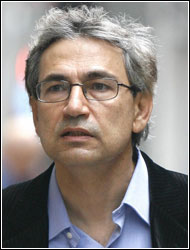 STOCKHOLM, Oct 12: Turkey’s best-known novelist Orhan Pamuk, who faced trial this year for insulting his country, won the Nobel prize for literature on Thursday in a decision some critics called politically charged.
“I am very glad and honoured. I am very pleased,” the Turkish writer told Sweden’s Svenska Dagbladet newspaper when asked how he felt about winning the 10 million Swedish crown ($1.36 million) prize. “I will try to recover from this shock.”
The Swedish Academy declared Pamuk the winner on a day when, to Turkey’s fury, the French lower house of parliament approved a bill making it a crime to deny the Armenian genocide.
In what was seen as a test case for freedom of speech in Turkey, Orhan Pamuk was tried for insulting ‘Turkishness’ after alleging in an interview with a Swiss paper last year that one million Armenians had died in Turkey during World War One and 30,000 Kurds had perished in recent decades.
Though the court dismissed the charges on a technicality, other writers and journalists are still being prosecuted under the article and can face a jail sentence of up to three years.
“With all due respect to Orhan Pamuk, whose books I read and like, I believe his comments on the Armenian genocide have been influential in his winning this prize,” said Suat Kiniklioglu, an Ankara-based political analyst.
“There is a political dimension to all this. I do not believe he was chosen purely on the basis of his artistic capacity,” Kiniklioglu said.
Orhan Pamuk, 54, shot to fame with novels that explore Turkey’s complex identity through its rich imperial past.
But his criticism of modern Turkey’s failure to confront darker episodes of that past has turned him more recently into a symbol of free thought both for the literary world and for the European Union, which Ankara wants to join.
“What I said is not an insult, it is the truth. But what if it is wrong? Right or wrong, do people not have the right to express their ideas peacefully?” Pamuk asked during the trial.
ARTISTIC FREEDOM: EU Enlargement Commissioner Olli Rehn celebrated Pamuk’s award as a triumph for free speech.
“Today’s Nobel Prize is good news for world literature, but also good news for artistic freedom and for freedom of expression,” he said in a statement.
Pamuk’s best-known novels include ‘My Name is Red’ and ‘Snow’, works that focus on the clash between past and present, East and West, secularism and Islamism — problems at the heart of Turkey’s struggle to develop.
Academy head Horace Engdahl stressed on Thursday that politics did not colour the selection process.—Reuters